

Princess Line Kurta Singapore – What It Is & Why It Flatters Every Body | Ivory Hues
Silhouette & Fit
Princess Line Kurta Singapore — The Cut That Flatters Every Body Type
One vertical seam. Infinite flattery. Here is everything you need to know about the princess line — the most elegant, figure-conscious cut in Indian ethnic fashion.
Shop Princess Line KurtasWhat Is a Princess Line Kurta?
A princess line is a tailoring technique where vertical seam lines run from the shoulder (or armhole) down through the bust and to the hem, in one continuous curve, without a horizontal waist seam. The name comes from Western fashion — specifically the style popularised by Worth couture in 19th-century Paris for Princess Alexandra of Wales — but the principle has been absorbed into Indian ethnic tailoring to create kurtas with structure, shape, and remarkable elegance.
In a standard straight-cut kurta, the garment is a rectangle of fabric with side seams only — it hangs freely from the shoulder with no shaping at the waist or bust. A princess line kurta, by contrast, is constructed from multiple vertical panels that are curved at the seams. The result is a kurta that follows the natural contours of the body: it takes in gently at the waist and releases again through the hip, creating a smooth, elongated silhouette.
Straight-cut Kurta
Rectangular panels, no waist shaping. Falls straight from shoulder to hem. Comfortable and relaxed — but can look boxy on some frames.
Princess Line Kurta ✦
Curved vertical seams from shoulder to hem. Gently shaped at bust and waist. Creates length, definition, and elegance without being fitted.
The designer's secret: Princess line seams create the optical illusion of a taller, slimmer silhouette — not by being tight, but by guiding the eye vertically. You can be perfectly comfortable and still look completely put-together.
Princess Line Kurta Sets at Ivory Hues Singapore
Our princess line designs combine the timeless flattery of this silhouette with Indian craft details — handloom fabrics, traditional embellishments, and rich natural colours. Each is a three-piece suit set including kurta, bottom, and dupatta.
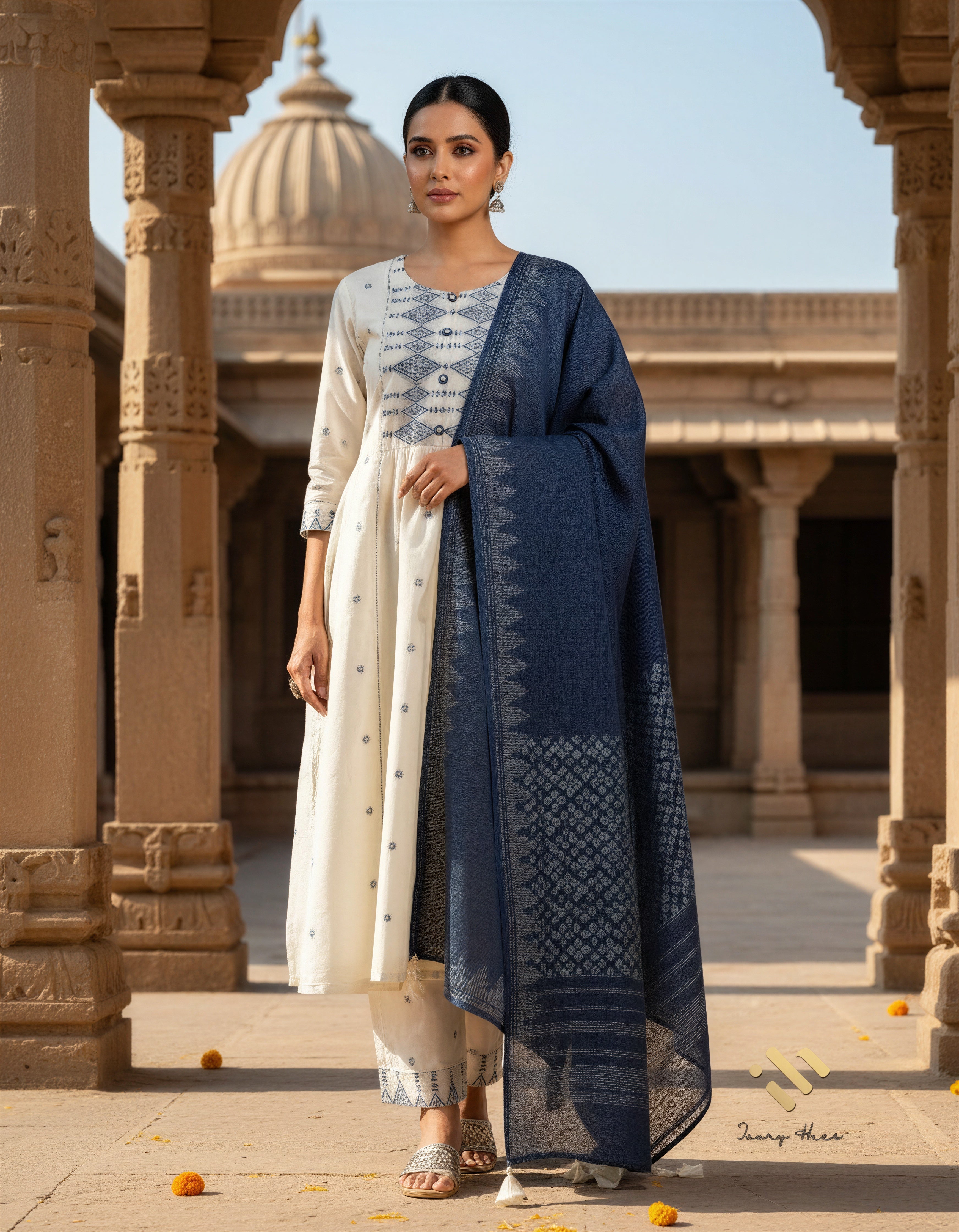
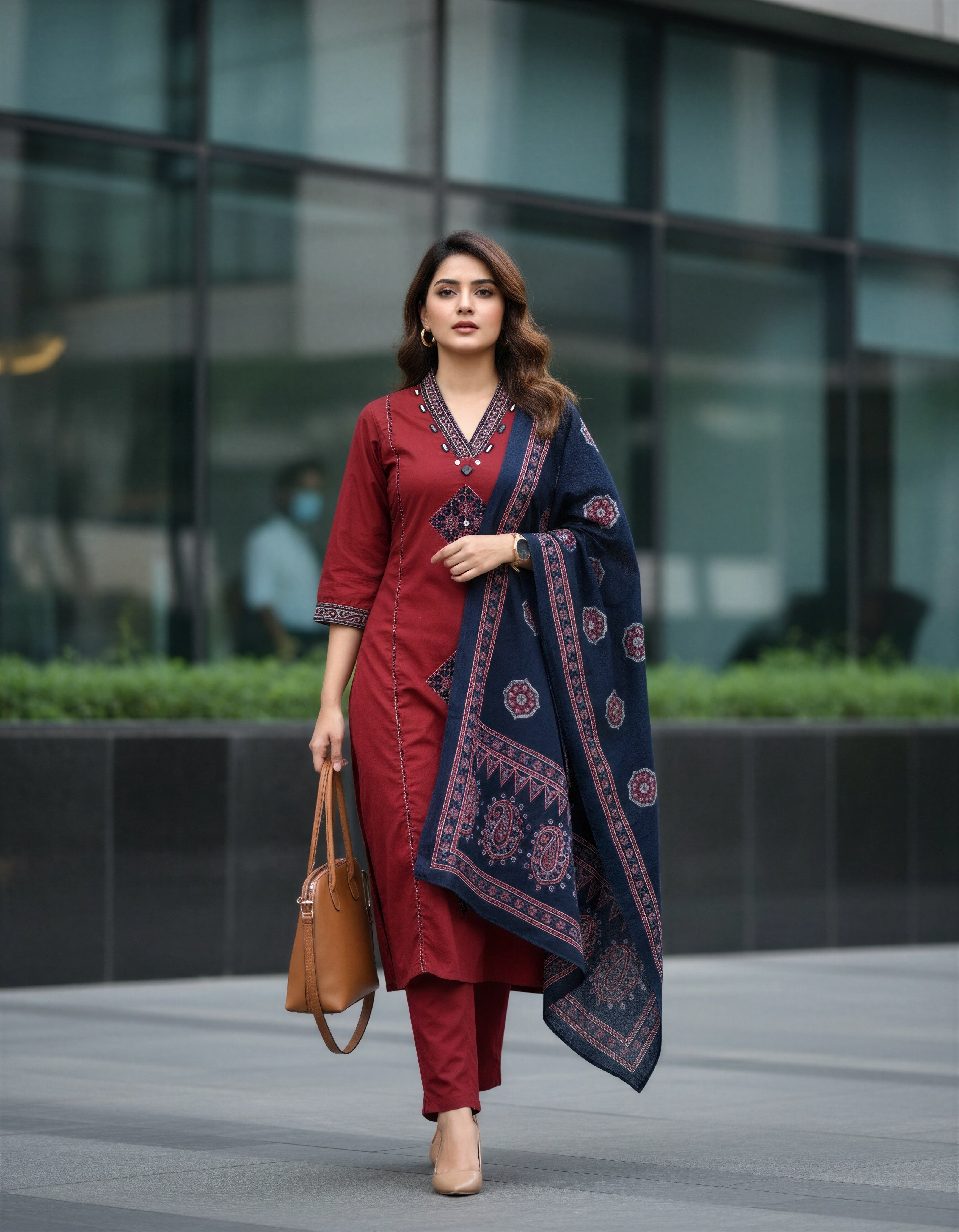
Both Malhar Resham and Anokhi Lata feature princess line construction with different fabric personalities — Jamdani for a festive, textured effect; pure cotton for everyday elegance.
Princess Line Kurta for Every Body Type
The princess line is universally flattering because its shaping is subtle, not constricting. Here is how it works across different body types.
Apple / Round
The vertical seams draw the eye down and away from the midsection, creating length. Choose a kurta that skims through the waist rather than cinching.
Pear / Triangle
The princess line balances wider hips by adding gentle structure at the bust and shoulders. A slightly flared hem through the hip is ideal.
Straight / Rectangle
The princess seam creates the illusion of curves by taking in subtly at the waist — making the waist look defined even without padding or structure.
Hourglass
The princess line follows your natural shape without fighting it. Choose a fabric with some drape (like Jamdani) for the most elegant result.
Petite
The vertical seams add visual height. Wear with slim churidars and a small heel to maximise the lengthening effect.
Tall
A floor-length or long princess line kurta is a showstopper on a taller frame. The cut has enough presence to fill the silhouette beautifully.
How to Style a Princess Line Kurta
Bottom Pairings
| Bottom Style | Effect | Best Occasion |
|---|---|---|
| Churidar | Maximises the lengthening line — the kurta and churidar read as one long column | Festive, semi-formal, office |
| Straight salwar | Relaxed and modern — lets the kurta be the focal point | Casual, weekend, everyday |
| Palazzo | Dramatic and fashion-forward — great for events | Parties, cultural events, Deepavali |
| Slim cigarette pants | Strongly elongating — an Indo-western look | Office, smart-casual, gallery visits |
Jewellery
- Malhar Resham (Jamdani): The woven texture pairs beautifully with antique gold jewellery — jhumkas, polki sets, layered necklaces. Keep the dupatta pinned elegantly to one shoulder.
- Anokhi Lata (cotton): The bold red-black contrast reads as a statement in itself. Keep jewellery simple — small gold studs or small silver jhumkas. Tie the dupatta in a structured drape across both shoulders.
Footwear
- Embroidered juttis or mojaris for traditional occasions
- Block heels (5–7 cm) for smart-casual and festive occasions — elongates the leg line further
- Flat Kolhapuri chappals for everyday wear
- Metallic strappy sandals for parties or events
Princess Line vs. Other Kurta Cuts — A Quick Comparison
| Cut | Shape | Best For | Occasion |
|---|---|---|---|
| Princess line | Gently curved vertical seams, shaped through waist | Most body types — especially those wanting definition | Festive, formal, smart-casual |
| Straight cut | Straight panels, no waist shaping | Those who prefer relaxed, unstructured fit | Everyday, office, casual |
| A-line | Flares gradually from bust to hem | Pear shape — balances hips, free at the bottom | Casual, everyday, festive |
| Anarkali | Full flared skirt from empire waist | Those wanting maximum drama and flow | Festive, weddings, grand occasions |
| Kaftan | Wide, flowing, no waist shaping | Those who want comfort and ease above all | Beach, home, casual outings |
Frequently Asked Questions
© Ivory Hues Singapore · www.ivoryhues.sg · Free island-wide delivery · Indian ethnic wear for women