

Mul Chanderi Kurta Set Singapore — Festival Fabric Guide | Ivory Hues
Fabric & Heritage
Mul Chanderi Kurta Set Singapore — Why This Fabric Is Made for Festive Season
Sheer, luminous, and breathable enough for Singapore's heat — mul Chanderi is the fabric Indian women reach for when an occasion calls for something special.
Shop Chanderi Kurta SetsWhat Is Mul Chanderi Fabric?
Chanderi is an ancient town in Madhya Pradesh, central India, whose weavers have been producing fine cloth for over a thousand years — supplying the courts of the Mughal emperors and the royal houses of Malwa. The fabric they make, Chanderi, is woven on handlooms using a distinctive combination of fibres: silk in the warp (the vertical threads) and cotton in the weft (the horizontal threads).
The variety called mul Chanderi (also written "mul chanderi" or "Chanderi cotton") is the sheerest and most delicate of the Chanderi weaves. Mul refers to a very fine, open weave — the same word used for mulmul (Indian muslin). The result is a fabric that is semi-transparent, feather-light, and has a soft, diffused lustre that is neither as matte as cotton nor as shiny as pure silk.
What Makes Chanderi Unique?
Three things set Chanderi apart from other Indian fabrics at similar price points:
- The translucency. Held to light, mul Chanderi has a delicate, glowing quality — the silk warp threads catch the light while the cotton weft provides body. It looks luminous on the body without being garish or heavily embellished.
- The woven motifs. Traditional Chanderi features small motifs called butis — tiny flowers, dots, or abstract shapes — woven directly into the fabric structure by the weaver, not printed or embroidered afterwards. These create a subtle texture you can feel with your fingertip.
- The drape. Chanderi flows softly, neither stiff nor clingy. It falls in gentle folds and moves beautifully when you walk — which is why it has always been the fabric of choice for dupattas on fine festive suits.
Chanderi's place in Indian textile tradition: Chanderi cloth was so prized that the Ain-i-Akbari (the administrative document of the Mughal emperor Akbar's court, compiled c. 1590) lists it among the finest fabrics of the empire. Mughal queens wore Chanderi; today, Indian women in Singapore wear it to Deepavali. The craft has not changed — only the occasion.
Shop Mul Chanderi Kurta Sets at Ivory Hues Singapore
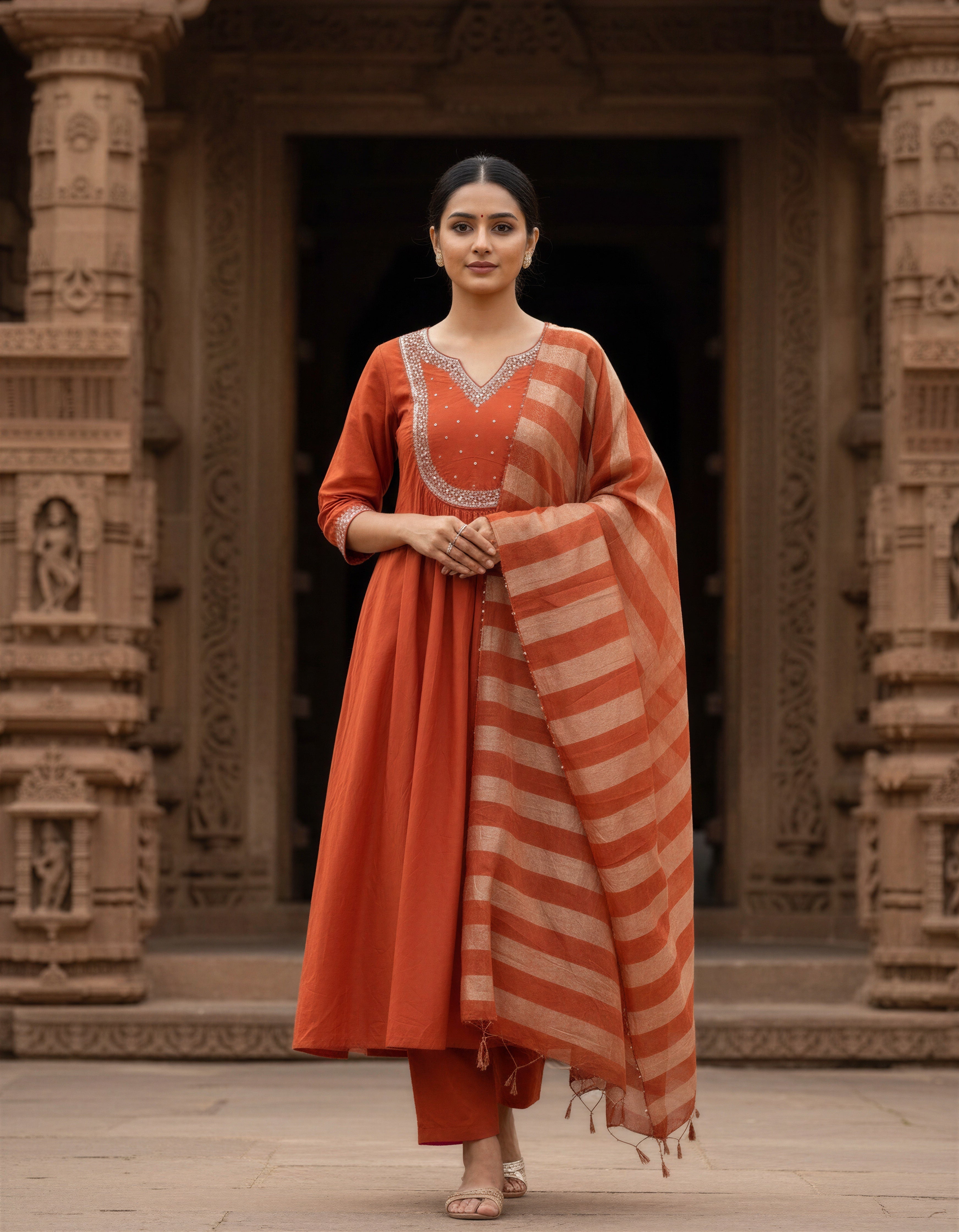
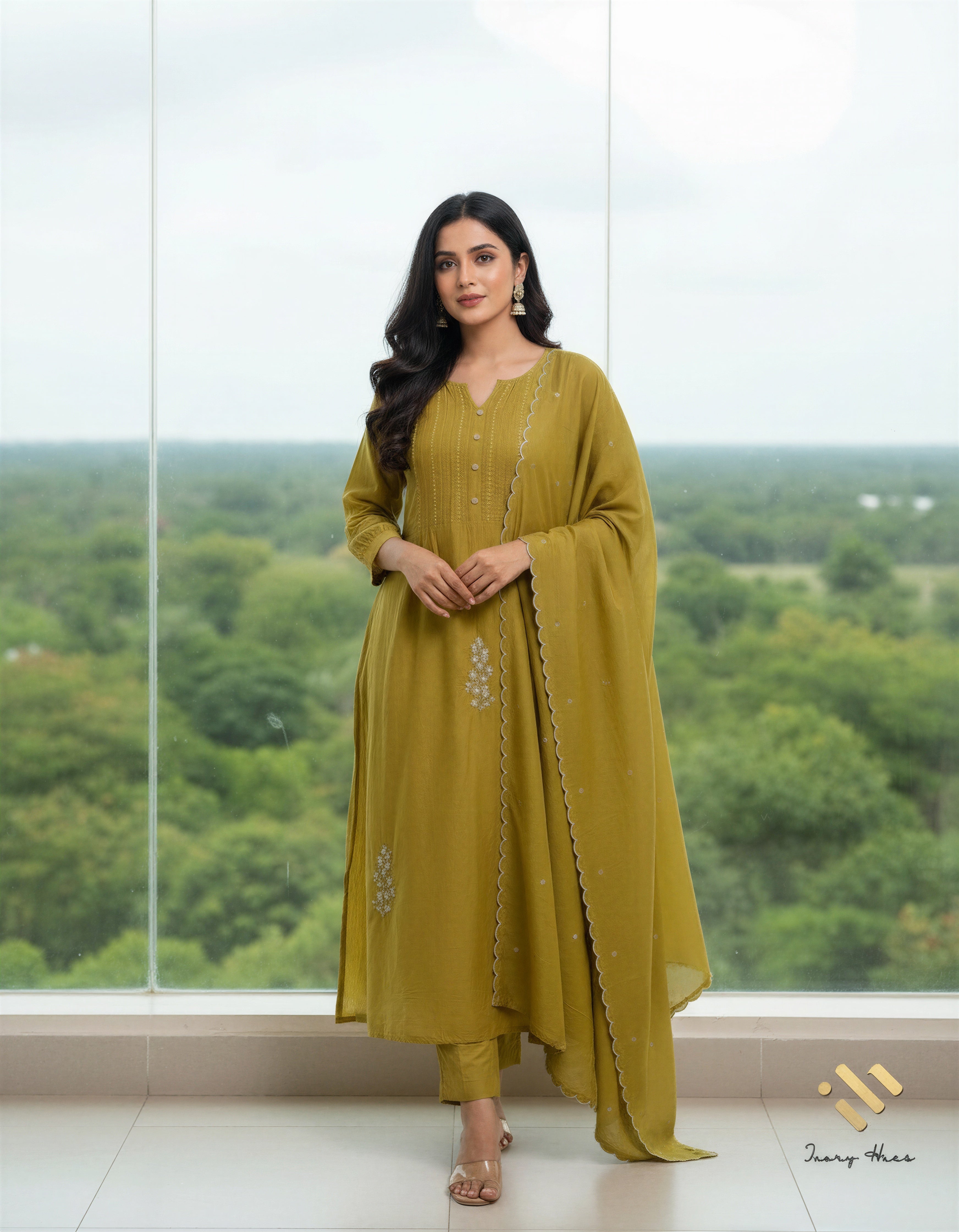
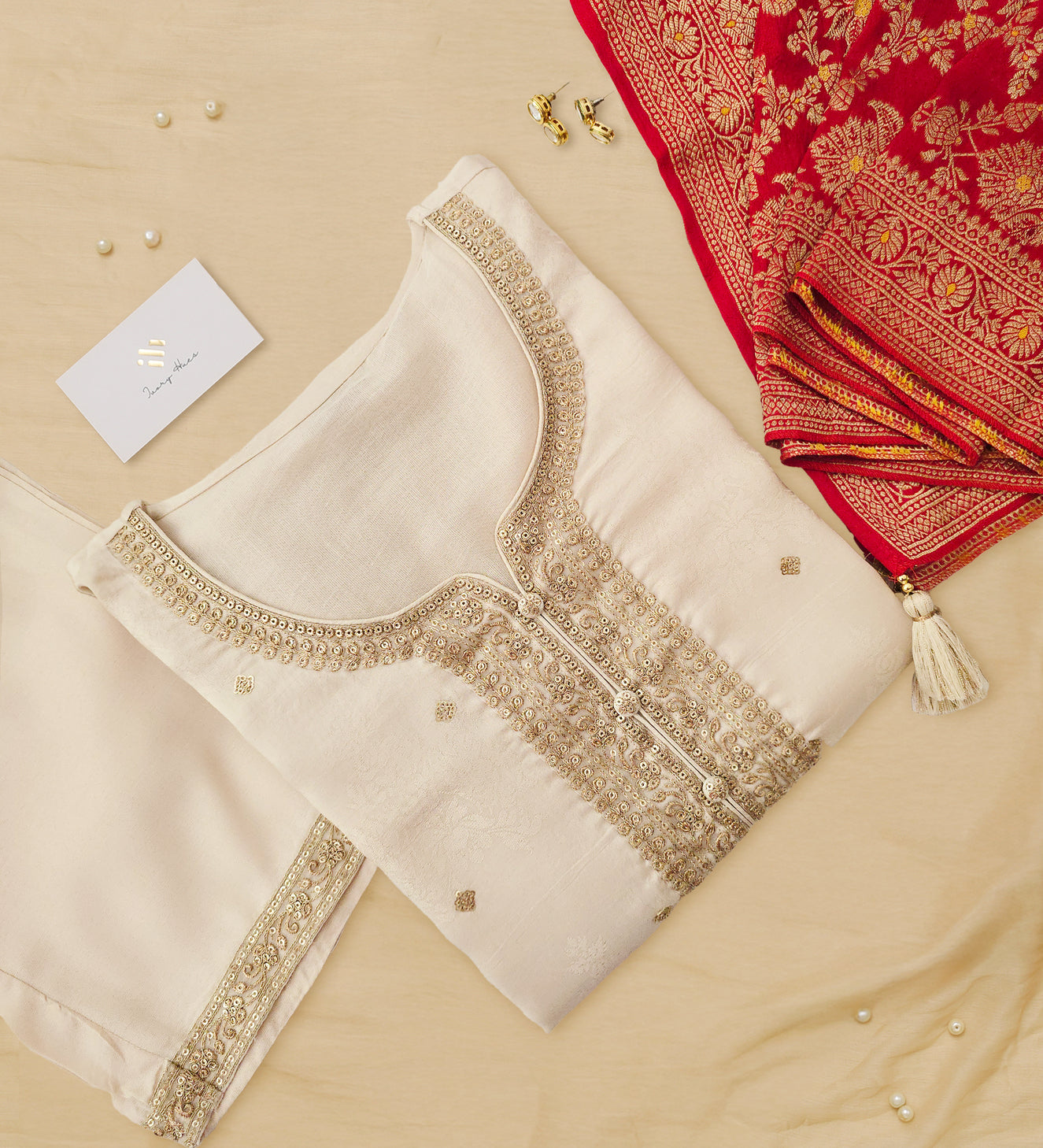
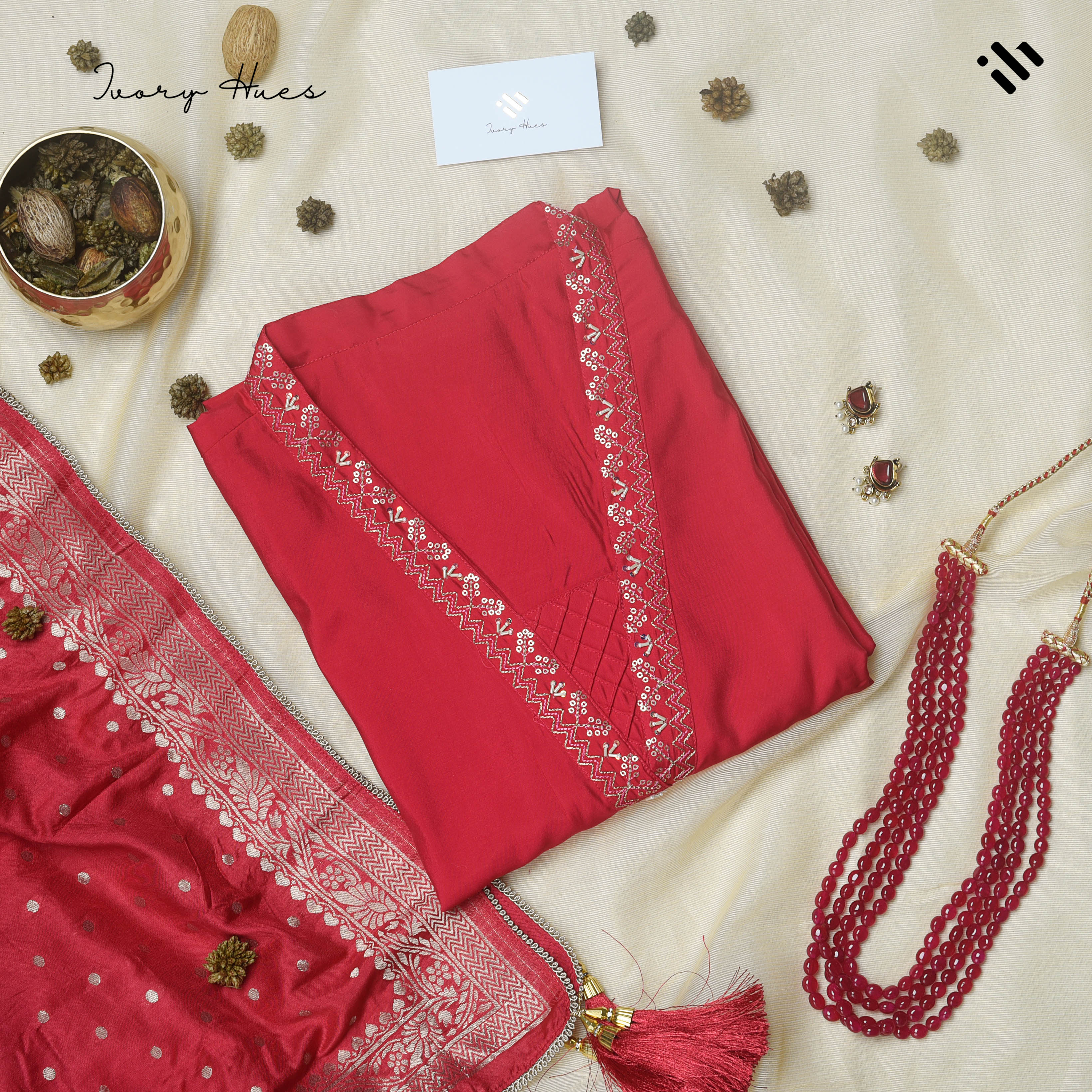
Our Noor collection is built entirely around mul Chanderi — festive-grade suit sets designed for the celebrations that matter. Each is a three-piece set: kurta, bottom, and dupatta.
Is Mul Chanderi Good for Singapore's Climate?
Singapore's heat and humidity are the real test of any fabric. Here is how Chanderi performs:
| Fabric | Breathability | Comfort in 32°C heat | Festive look |
|---|---|---|---|
| Mul Chanderi | Very good — silk+cotton blend breathes well | Good — light enough for tropical wear | Excellent — semi-sheer luminosity |
| Pure cotton | Excellent | Excellent | Moderate — more casual |
| Heavy silk (Kanjivaram) | Poor — traps heat | Uncomfortable outdoors | Excellent — but for AC venues only |
| Georgette (polyester) | Poor — synthetic traps heat | Uncomfortable | Good — but lacks authenticity |
The verdict: mul Chanderi is the best fabric for Deepavali, Onam, cultural events, and festive house visits in Singapore. It looks appropriately festive without making you uncomfortable in the heat. For fully outdoor events in the midday sun, Kota Doria (even lighter) is preferable; for air-conditioned venues, Chanderi is ideal.
How to Style a Mul Chanderi Kurta Set
For Deepavali & Festive Occasions
- Wear the full 3-piece set — kurta, churidar, and dupatta pinned at the shoulder with a brooch.
- The semi-sheer kurta calls for a well-fitted churidar underneath — the Chanderi drapes beautifully over it.
- Statement jewellery works well: jhumkas (chandelier earrings), a temple-style necklace, or a polki set in gold.
- Footwear: embroidered juttis or heeled sandals. Avoid chunky or sports footwear.
For Cultural Events & House Visits
- Carry the dupatta loosely draped over the shoulders — slightly more casual than the pinned style, but still elegant.
- Balance the sheerness of the fabric with confident accessories: a bold bangle stack or a layered gold chain.
Jewellery Pairings by Colour
| Chanderi Colour | Jewellery Metal | Stone / Accent |
|---|---|---|
| Deep rust (Noor Jwala) | Antique gold | Kundan, coral, red onyx |
| Apple green (Noor Fiza) | Gold or silver | Pearls, emerald, mint enamel |
| Off-white (Noor Naira) | Gold | Polki, pearl, champagne crystal |
| Plum (Noor Shaam) | Antique gold or oxidised silver | Amethyst, dark crystal, lac |
Caring for Your Mul Chanderi Kurta Set
Chanderi is delicate — the silk warp threads need gentle handling to maintain their lustre and the fabric's drape over time.
-
Hand wash only in cold water
Never machine wash Chanderi. Hand wash in cold water (below 25°C) with a very small amount of mild shampoo or baby wash. Swirl gently — do not scrub or rub. -
Wash separately
Chanderi can bleed colour in the first wash. Wash alone or with similar-coloured items. The colour will stabilise after 2–3 washes. -
Press, do not wring
Wringing Chanderi distorts the weave and the woven buti motifs. Press water out gently by rolling the fabric in a dry towel. -
Dry flat in shade
Lay flat on a clean towel or hang on a padded hanger in shade. Singapore's strong sunlight fades Chanderi's delicate colours quickly. -
Iron on low, with a pressing cloth
Use the lowest heat setting and iron on the reverse side through a thin cotton cloth. Never iron directly on the woven motifs — the silk threads can flatten permanently. -
Dry clean for best results
For your best pieces — especially embellished Chanderi with sequins or embroidery — dry cleaning is the safest option and will maintain the fabric's lustre for years.
Frequently Asked Questions
© Ivory Hues Singapore · www.ivoryhues.sg · Free island-wide delivery · Indian ethnic wear for women