






Kurta vs Kurti vs Anarkali vs Co-ord Set Explained
A kurta is a straight-cut, longer tunic — historically worn by both men and women — usually paired with a churidar or palazzo. A kurti is its shorter, more fitted, contemporary cousin, cut specifically for women and easy to wear on its own with jeans or leggings. An anarkali is a distinct silhouette rather than just a length: a fitted bodice that flares dramatically from the bust or waist into a long, often floor-length frock, historically linked to Mughal-era court dress. A co-ord set is a broader, modern category — any matching two-piece top-and-bottom outfit in the same fabric or print, which can even include a kurta-style top paired with trousers.
Quick Facts: The Four Terms at a Glance
- Kurta: Longer, straight-cut tunic, historically unisex
- Kurti: Short, fitted, contemporary cut — women's wear
- Anarkali: Fitted bodice flaring into a floor-length frock, Mughal-court origin
- Co-ord Set: Matching two-piece top and bottom, modern styling category
Kurta vs Kurti vs Anarkali vs Co-ord Set: Comparison Table
These four terms get used interchangeably, but each describes a genuinely different garment.
| Term | Typical Length | Silhouette | Typical Occasion | Pairs With |
|---|---|---|---|---|
| Kurta | Knee-length to below the calf | Straight-cut tunic, minimal shaping | Casual to festive, depending on fabric | Churidar, salwar, palazzo; dupatta optional |
| Kurti | Hip-length to upper-thigh | Fitted, tailored, contemporary cut | Casual to semi-formal, everyday wear | Jeans, leggings, palazzos, skirts |
| Anarkali | Often floor-length | Fitted bodice flaring into a full frock/gown shape | Festive, formal, wedding-guest occasions | Churidar or fitted leggings, dupatta |
| Co-ord Set | Varies by design | Two matching pieces in the same fabric/print | Casual to festive, depending on fabric | Worn as a set, or mixed with separates |
What Is a Kurta?
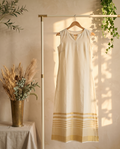
A kurta is a loose, straight-cut tunic that falls anywhere from the knee to well below the calf, traditionally finished with side slits, a simple round or mandarin collar, and minimal shaping. It's one of the oldest and most gender-neutral garments in Indian fashion — men and women have both worn kurtas for centuries, though today's women's kurtas are increasingly cut with darts or princess seams for a more shaped silhouette.
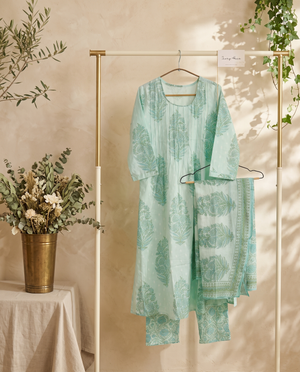
A kurta is rarely worn as a complete outfit alone. It's typically paired with a churidar, salwar, palazzo, or straight trousers, and sometimes a dupatta, which is why it's usually sold as a "kurta set." Because kurtas range from plain everyday cotton to heavily embroidered festive pieces, the same basic silhouette moves from a casual weekday look to a wedding-guest outfit depending on fabric and embellishment rather than cut.
If you want to see the kurta silhouette in ready-to-wear sets, our Noor and Kota Kainaat collections are a good place to start browsing.

What Is a Kurti?
A kurti is the shorter, more fitted, distinctly contemporary offshoot of the kurta. Where a kurta is cut loose and long, a kurti typically ends around the hip or upper thigh, follows the body more closely, and is designed to work as a standalone top rather than one half of a traditional set.
The term itself is specific to women's fashion — "kurti" describes a women's-cut garment, unlike "kurta," which spans both menswear and womenswear. Kurtis are the easiest of these four categories to dress casually: pair one with jeans, leggings, palazzos, or a long skirt, and it reads as smart-casual rather than festive. Because kurtis usually skip the dupatta and heavier draping of a full ethnic set, they sit toward the everyday-to-semi-formal end of the occasion spectrum rather than the wedding-and-festival end.
What Is an Anarkali?
An anarkali is defined less by length than by shape. The silhouette has a fitted bodice through the chest that flares dramatically outward — from the bust or waist — into a full, often floor-length skirt, achieved with multiple fabric panels or heavy pleating. Worn over a churidar with a dupatta, a complete anarkali outfit reads more like a gown than a top-and-bottom set.
Where does the name come from? The silhouette is widely traced to Mughal-era court dress of the 16th–17th centuries, when flared, richly embellished tunics were worn by court dancers. The name is popularly attributed to a legendary Mughal-court dancer called Anarkali — though the romantic story is folklore passed down through generations rather than verified history. What is well documented is the silhouette's court origins and its long association with formal occasion wear.
Because of its flare and floor-sweeping length, an anarkali sits at the most formal, festive end of the four silhouettes here — the natural choice for a gown-like presence without an actual gown. Ivory Hues doesn't sell this silhouette under the anarkali name, but for a fuller, more dramatic flare in a kurta-style top, our Malhar collection is worth browsing.

What Is a Co-ord Set?
A co-ord set — short for "coordinated set" — is a modern, broader category: any matching top and bottom cut from the same fabric, print, or colour story, worn together as a single, already-put-together outfit. Unlike a suit set, a co-ord doesn't imply a specific ethnic construction — it can be a kurta-style top with matching trousers, a shorter top with a skirt, or an Indo-western crop-and-pants pairing, and it typically skips the dupatta.
What makes co-ord sets popular is flexibility: the two pieces already match, so they take far less styling effort, yet each half can usually be worn separately too — spanning everything from breezy daytime pieces to dressier festive-print sets.
Ivory Hues carries kurta sets, co-ord sets, and suit-set styles across several collections — our Gulmarg and Anokhi collections are good places to see the matching-set idea in ready-to-wear pieces.

How to Choose the Right Silhouette for the Occasion
Match the occasion to the silhouette below.
- Everyday errands: A kurti with jeans, leggings, or palazzos — easy, standalone, no draping.
- Smart-casual office day: A breathable kurti, or a simple co-ord set in cotton or linen.
- Puja or a festive gathering: A kurta set with a churidar or palazzo and a dupatta.
- Brunch or a garden party: A co-ord set — photogenic with almost no styling effort.
- Wedding reception or sangeet: An anarkali, or a heavily embellished kurta set, for a gown-like presence.
- Daytime wedding or outdoor ceremony: A lighter-fabric kurta set or a shorter anarkali — festive, easier to move and stay cool in.
Frequently Asked Questions
Is a kurta the same as a kurti?
No. A kurta is the longer, straight-cut tunic — often falling to the knee or below — historically worn by both men and women, paired with a churidar, salwar, or palazzo. A kurti is shorter, ending around the hip or thigh, more fitted, cut for women, and worn as a standalone top with jeans, leggings, or a skirt. Length, fit, and gender-neutrality separate the two.
Can men wear kurtis?
Not typically. "Kurti" is specific to women's fashion — a short, fitted, contemporary top cut for a woman's silhouette. The equivalent short top in menswear is just called a short kurta, not a kurti. A kurta itself is historically and still commonly worn by men, in longer cuts paired with pyjama or churidar bottoms.
What makes a suit set different from a co-ord set?
A suit set is a traditional Indian ethnic ensemble — a kurta or kameez, a bottom such as a churidar or palazzo, and usually a dupatta. A co-ord set is a broader, modern term for any matching two-piece outfit in the exact same fabric and print, and doesn't necessarily include a dupatta or follow traditional construction. Every suit set is loosely "coordinated," but not every co-ord set follows a suit's structure.
Is an anarkali formal enough for a Singapore wedding?
Yes. An anarkali is one of the more formal, festive Indian ethnic silhouettes, which is why it's a popular choice for wedding guests — its floor-length flare and heavier embellishment give it a gown-like presence for evening functions and receptions. For a daytime wedding in Singapore's heat, a shorter or lighter-fabric anarkali, or an embellished kurta set, offers the same festive feel with more comfort.
Do co-ord sets always come with a dupatta?
No. Unlike a suit set, a co-ord set is usually just two pieces — a top and a bottom in matching fabric — without an automatic dupatta. Some ethnic-leaning co-ord sets add a third matching piece, but that's the exception, which is part of what makes co-ord sets feel more modern and versatile than a classic three-piece suit.
Which of these is easiest to style for someone new to Indian wear?
A co-ord set or a kurti is the easiest starting point. A co-ord set is already matched for you, and a kurti pairs with jeans, palazzos, or a skirt you may already own. A kurta set and an anarkali involve more traditional layering — dupattas, churidars, closer occasion-matching — worth trying once you're comfortable with the basics.
Found Your Silhouette?
Ivory Hues carries kurta sets, co-ord sets, and suit-set styles across our collections. Browse Noor, Gulmarg, Kota Kainaat, Anokhi, and Malhar to find the silhouette and fabric that fits your next occasion.