

Indian Fabric Guide Singapore — Cotton vs Silk vs Chanderi vs Jamdani | Ivory Hues
Complete Reference Guide
Indian Fabric Guide Singapore — Cotton, Silk, Chanderi, Jamdani & More
Six key Indian ethnic wear fabrics explained: what they feel like, how they perform in Singapore's heat, when to wear them, and how to care for them — with real product examples at every price point.
Shop All FabricsChoosing Indian ethnic wear from an online store can feel overwhelming when fabric names like "Chanderi", "Jamdani", or "Kota Doria" are unfamiliar. This guide cuts through the confusion. We cover every fabric stocked at Ivory Hues — what it is, where it comes from, and most importantly, how it performs in Singapore's tropical climate.
Contents
- Pure Cotton & Handloom Cotton — the everyday choice
- Mul Chanderi — the festive silk-cotton blend
- Jamdani — India's UNESCO heritage weave
- Kota Doria — the lightest summer fabric
- Gajji Silk — structured Gujarati silk
- Brocade & Jacquard Silk — for grand occasions
- Master comparison table
- Which fabric for Singapore's weather?
- FAQ
Pure Cotton & Handloom Cotton
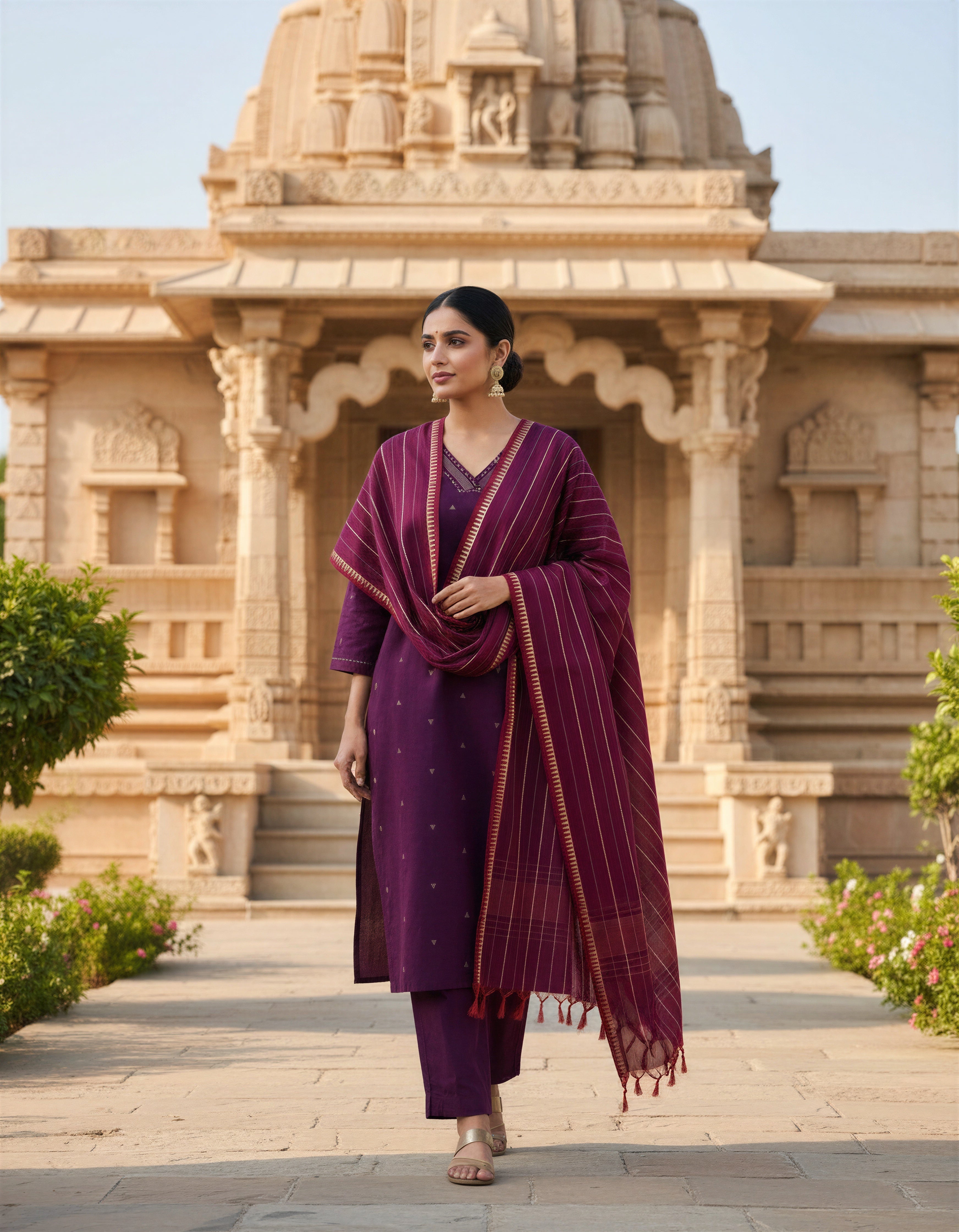
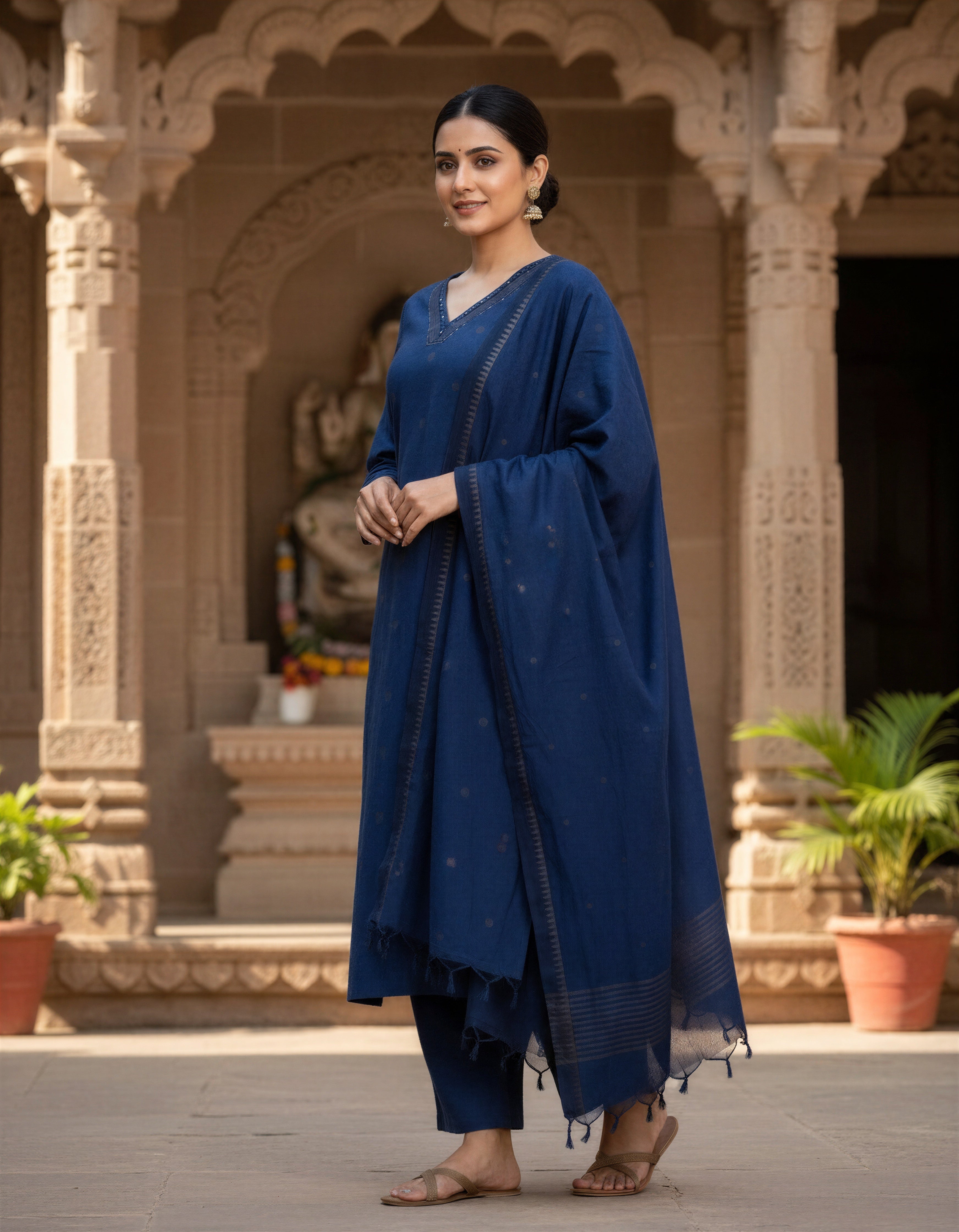
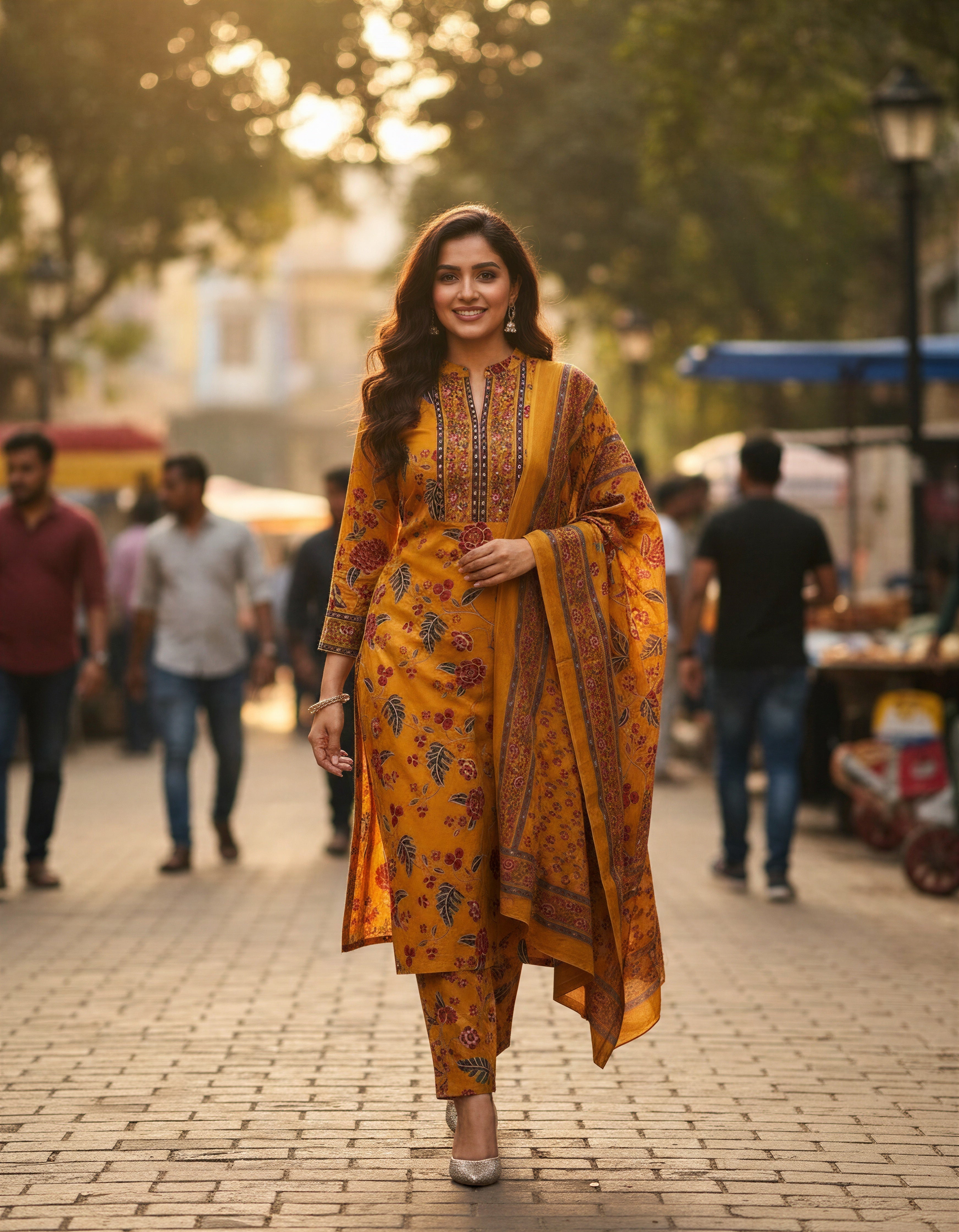
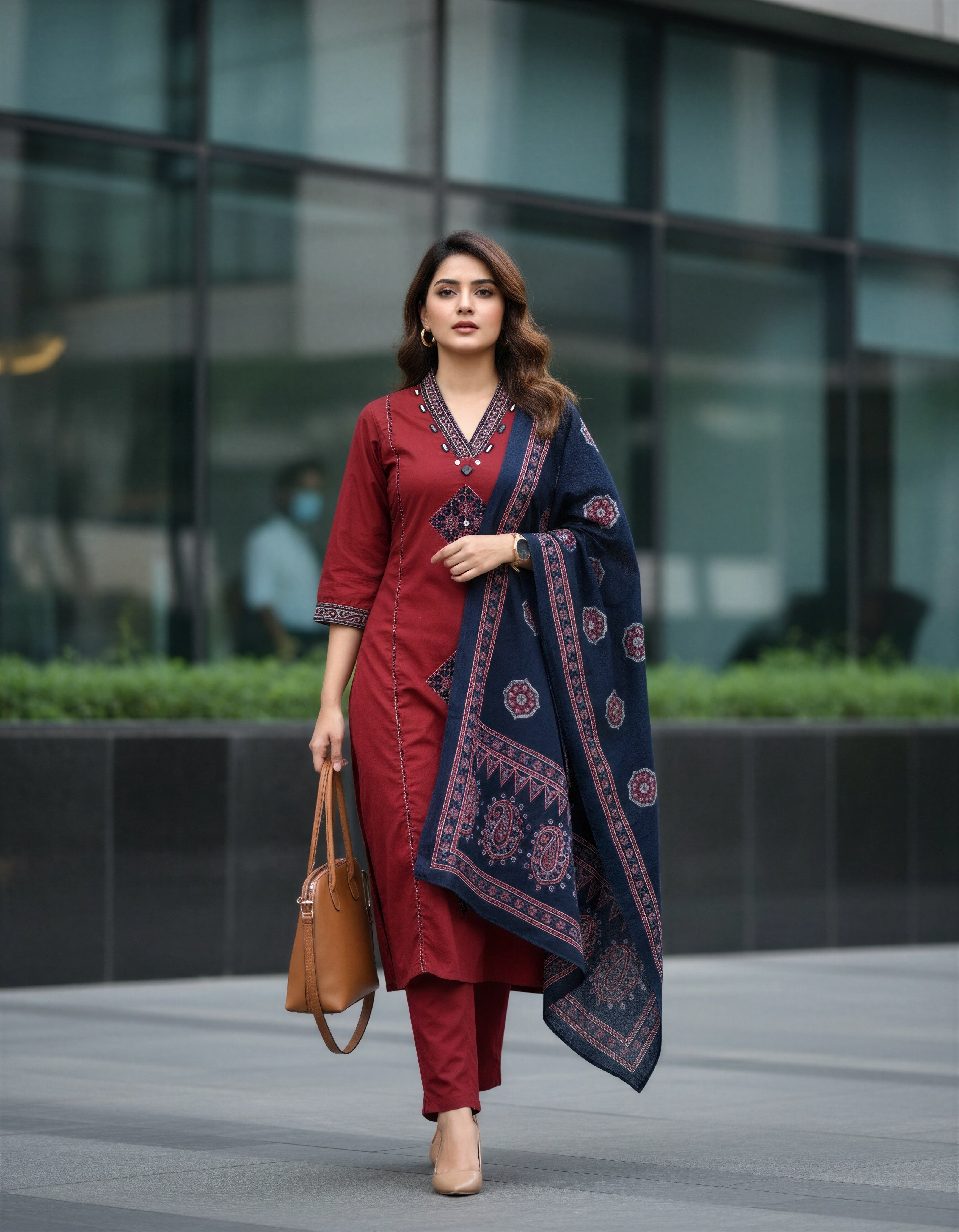
Pure cotton is the backbone of everyday Indian ethnic wear. It is grown across India and woven into a vast range of fabrics — from fine mulmul (muslin-like and almost transparent) to dense handloom cotton that holds its shape firmly. At Ivory Hues, our cotton suit sets use handloom cotton: a slightly textured, characterful weave that is noticeably different from the thin, flat cotton of mass-market fast fashion.
Handloom cotton is woven on a loom powered by hand or foot (not an industrial powerloom), which creates a fabric with natural variation in weave density — slightly thicker in some threads, thinner in others. This gives it a natural texture that is pleasant to touch and that improves with every wash as the fibres soften.
Singapore verdict: Our top pick for everyday wear
Shop Cotton Suit Sets at Ivory Hues
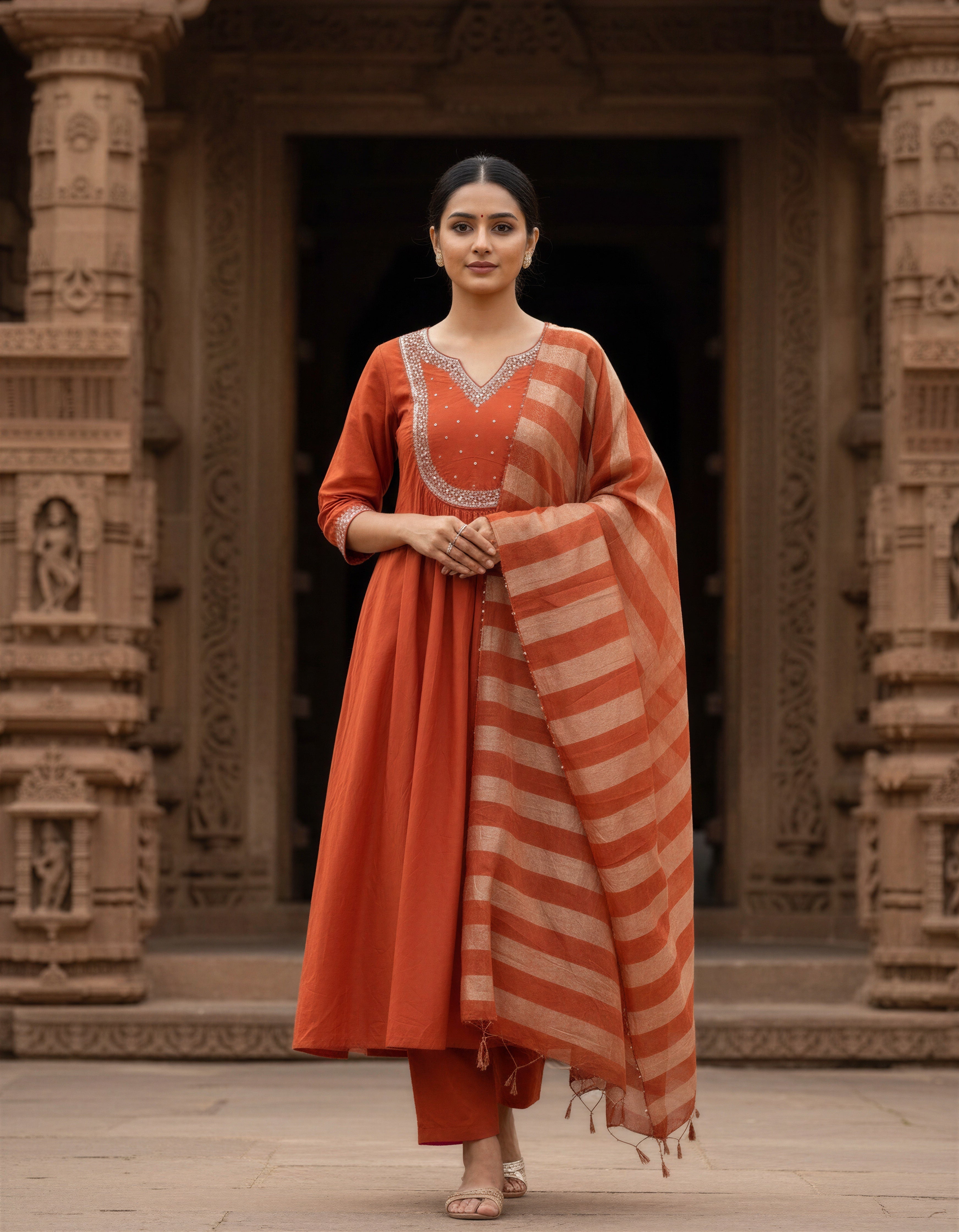
Mul Chanderi — The Festive Silk-Cotton Blend
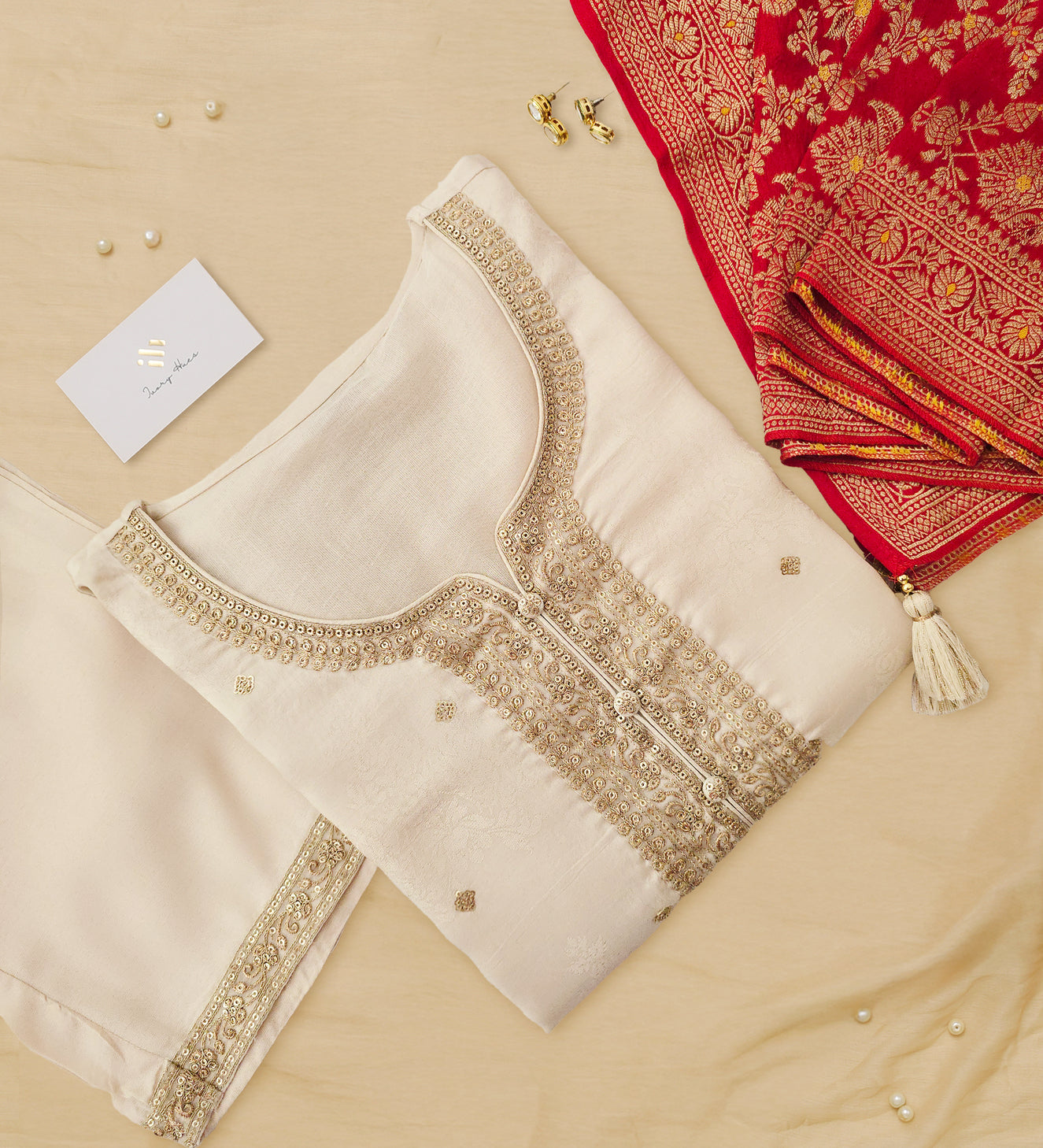
Chanderi is a town in Madhya Pradesh whose weavers have produced fine fabric for the courts of Malwa and the Mughal empire since the 11th century. Mul Chanderi (also called "Chanderi cotton") is woven with silk in the warp (lengthwise threads) and cotton in the weft (crosswise threads). The result is a fabric that combines the sheerness and soft lustre of silk with the breathability and comfort of cotton.
The defining visual quality of mul Chanderi is its translucency — it is a semi-sheer fabric that has a delicate, luminous quality in the light. Traditional Chanderi features small woven motifs called butis (small flowers or dots) integrated directly into the weave. Modern Chanderi adds embroidery, sequins, or border detailing.
Mul Chanderi is considered a festive fabric in India — it occupies the space between everyday cotton (too casual for festivals) and heavy silks (too formal for a house gathering). It is the ideal fabric for Deepavali, Onam, Eid, weddings, and cultural events.
Singapore verdict: The go-to festive fabric
Shop Mul Chanderi Suit Sets
Jamdani — India's UNESCO Heritage Weave
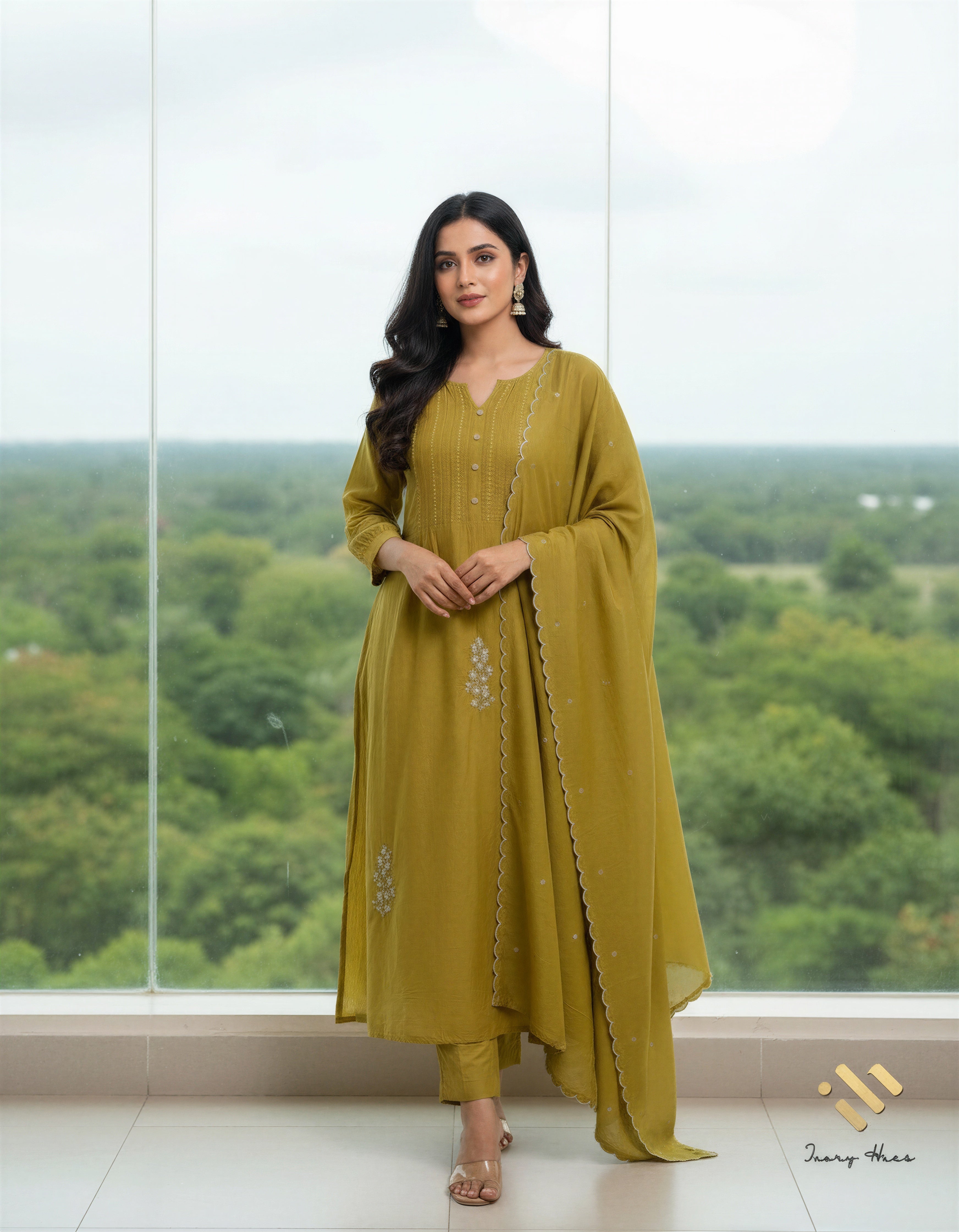
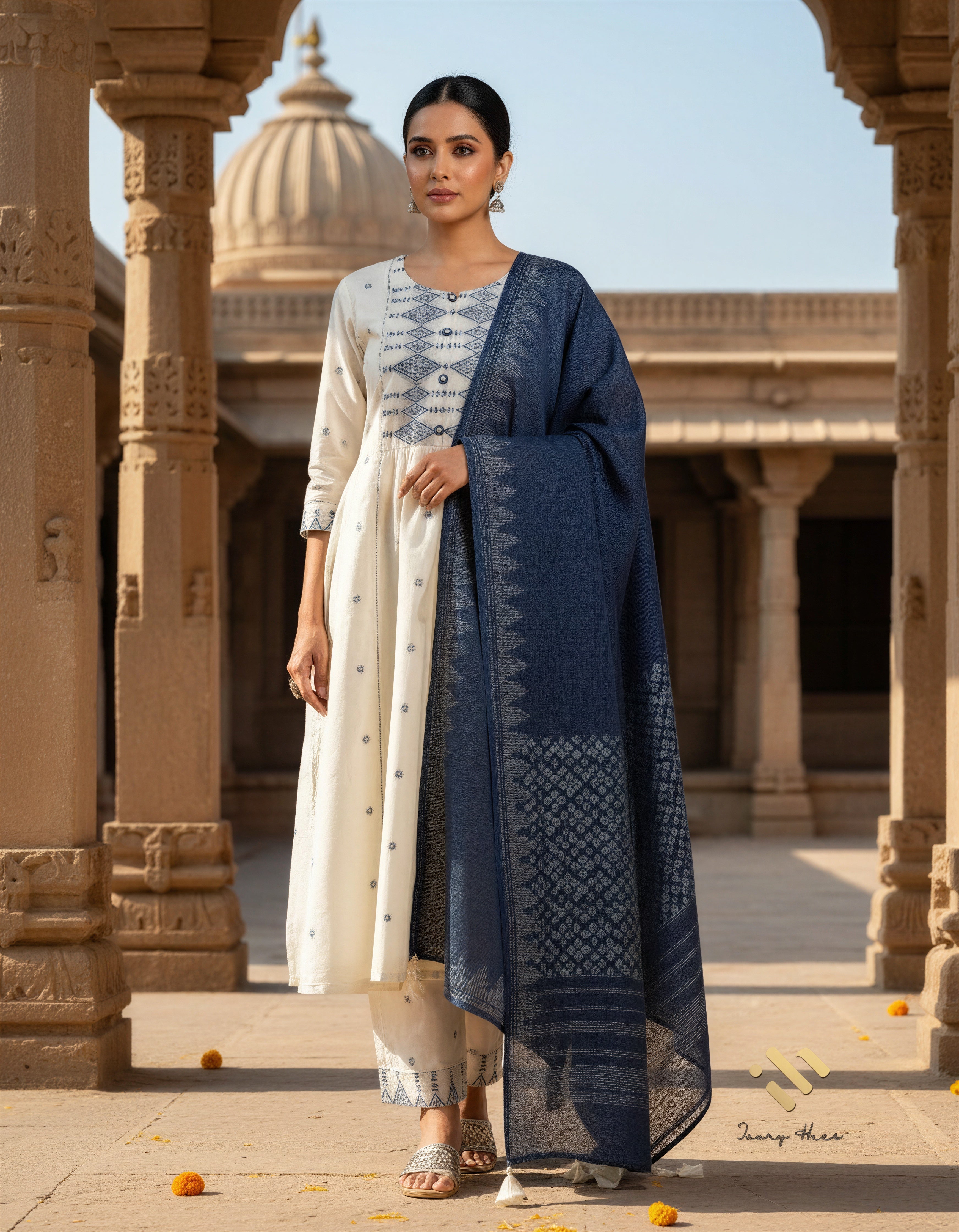
Jamdani is one of the oldest and finest cotton weaving traditions in the world. It originates from Dhaka (now the capital of Bangladesh, formerly the muslin capital of the Mughal world) and has been listed as a UNESCO Intangible Cultural Heritage of Humanity since 2013. The name comes from Persian — jam (flower) and dani (vessel or vase) — referring to the floral motifs woven into the fabric.
What makes Jamdani extraordinary is its technique: motifs are woven directly into the fabric structure during weaving, not printed or embroidered on afterwards. The weaver works with two shuttles simultaneously — one carrying the base thread, one carrying the pattern thread — and the motifs emerge from the intersection of threads. A single metre of fine Jamdani can take days to produce.
The visual result is a fabric with subtle, textured pattern that appears to float on the surface. In certain lights, Jamdani has an almost three-dimensional quality — the raised woven pattern catches light differently from the ground fabric.
Singapore verdict: The connoisseur's fabric
Shop Jamdani at Ivory Hues
Kota Doria — The Lightest Fabric for Singapore
Kota Doria (or Kota Doree) is a GI-tagged fabric from Kota, Rajasthan. It is woven in a distinctive check pattern (called khat) formed by interspersing silk threads among cotton threads at regular intervals, creating a fabric with a subtle grid texture that is visible when held to light. This open-weave structure is the source of Kota Doria's legendary breathability.
Kota Doria is widely considered the best Indian fabric for extreme heat, and in Singapore's tropical climate it is genuinely superior to all other Indian fabrics for daytime outdoor wear. It is feather-light, allows maximum air circulation, and the silk threads give it a soft lustre that elevates it above plain cotton.
Singapore verdict: Best for outdoor events and maximum heat
Browse our Kota Kainaat collection for Kota Doria suit sets.
Gajji Silk — Structured Gujarati Silk
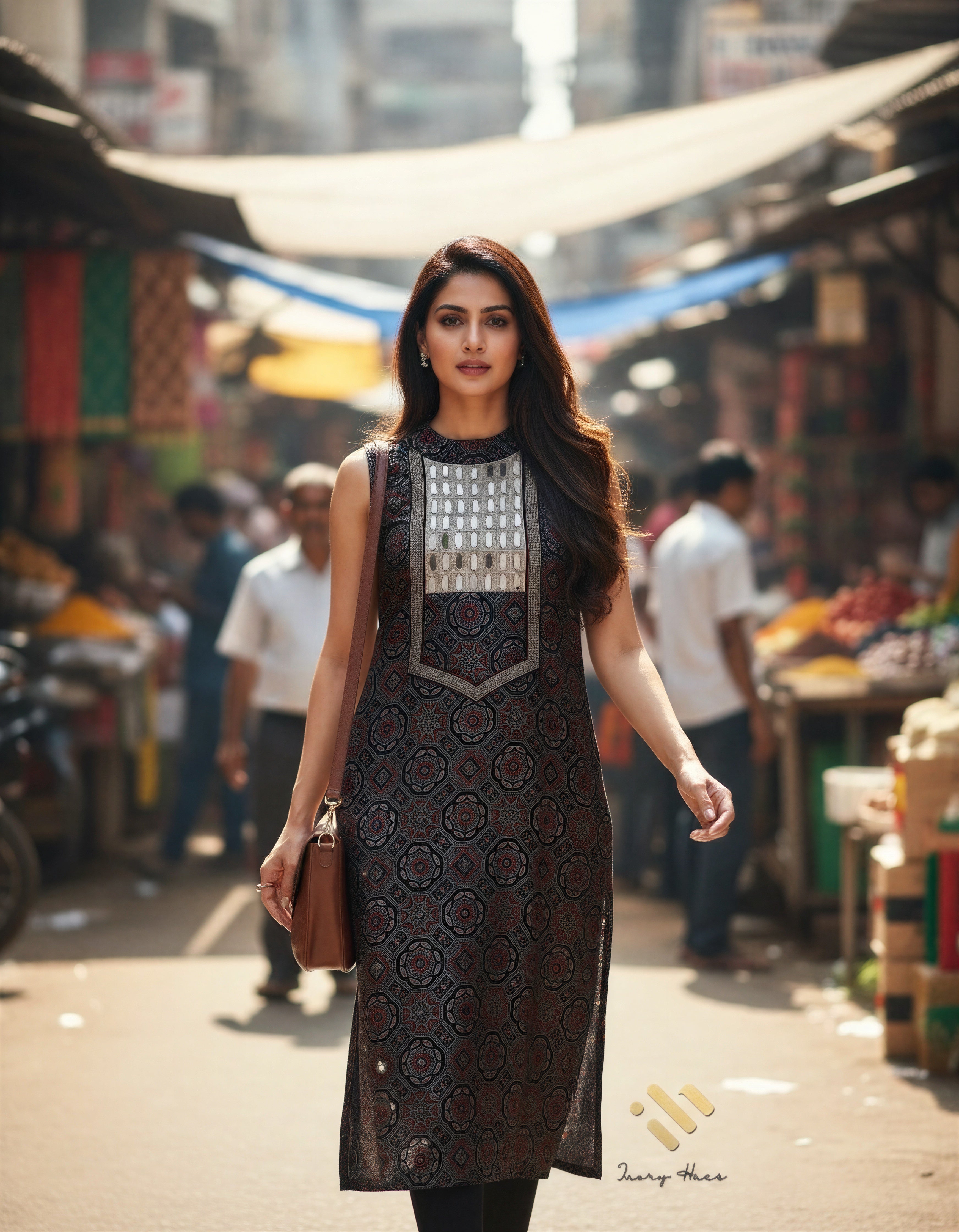
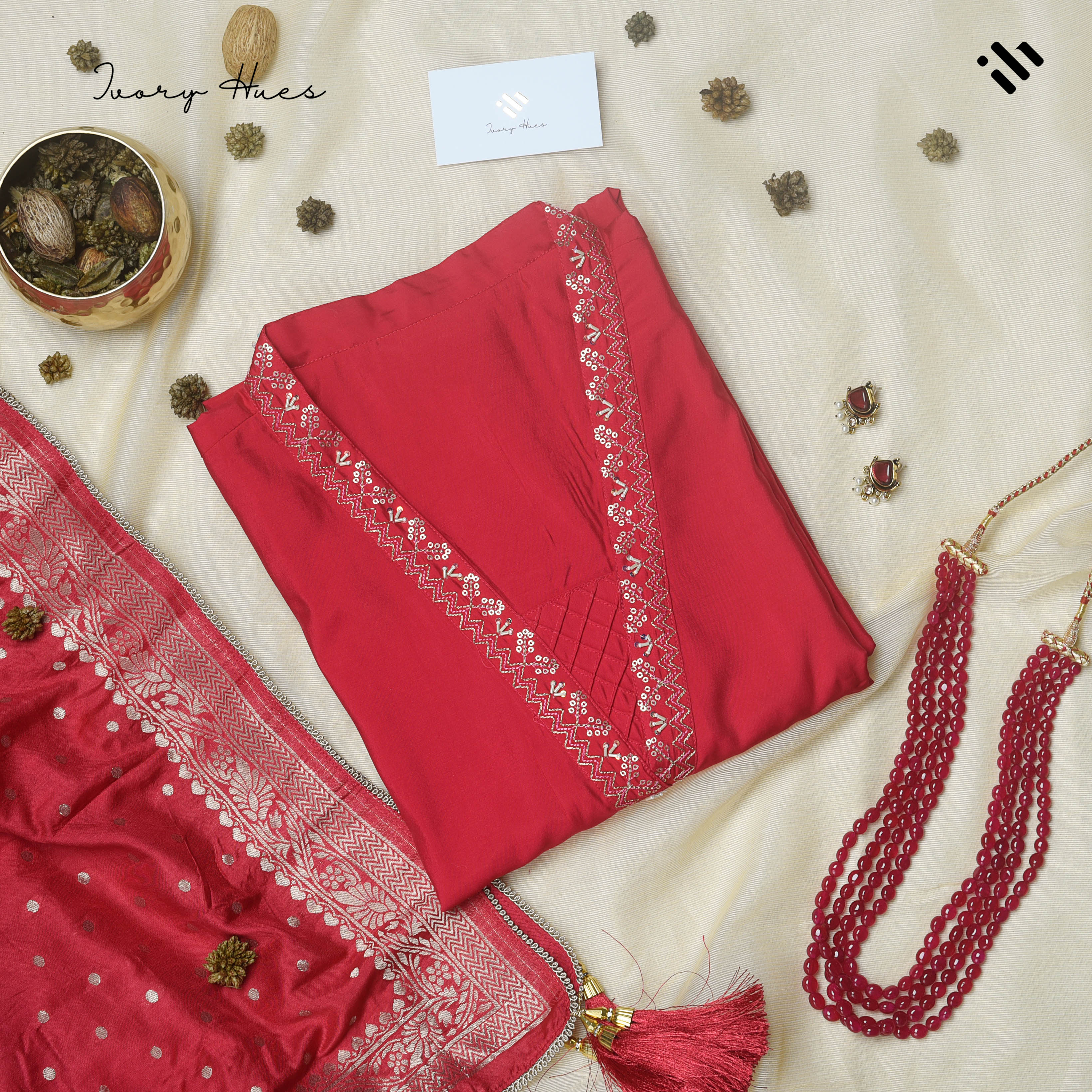
Gajji silk is a traditional Gujarati silk with a medium weight and structured drape. Unlike fluid silks (georgette, chiffon), gajji holds its shape — making it practical for standalone kurtis that need to look polished all day. It takes jewel-tone colours beautifully and has a subtle matte-sheen finish.
In Singapore, a sleeveless gajji silk kurti is surprisingly practical — the structured drape means it does not cling in the heat, and a sleeveless cut maximises airflow. Best worn for indoor occasions: office, restaurant, cultural centre, evening outings.
Singapore verdict: Best silk option for smart-casual everyday wear
Shop Gajji Silk at Ivory Hues
Brocade & Jacquard Silk — For Grand Occasions
Brocade (especially Banarasi brocade from Varanasi) and jacquard silk are the most opulent Indian fabrics. Brocade uses supplementary weft threads — often metallic gold or silver — to create raised patterns on the fabric surface. Jacquard silk uses a mechanical loom technique to weave complex patterns directly into the silk structure.
Both fabrics are heavier than cotton, Chanderi, or Kota Doria, and are best suited for air-conditioned indoor occasions in Singapore. They are the fabric of celebration — weddings, formal receptions, significant festivals.
Singapore verdict: Reserve for special, air-conditioned occasions
Shop Brocade & Jacquard at Ivory Hues
Master Comparison Table — All 6 Fabrics
| Fabric | Fibre | Weight | Breathability | Best Occasion | Price Range | Care |
|---|---|---|---|---|---|---|
| Pure / Handloom Cotton | 100% cotton | Light–medium | ★★★★★ | Everyday, office, casual festival | S$65–90 | Machine wash cold |
| Mul Chanderi | Silk warp + cotton weft | Very light, sheer | ★★★★☆ | Deepavali, Onam, weddings, cultural events | S$85–115 | Hand wash / gentle machine |
| Jamdani | Handloom cotton | Light–medium | ★★★★★ | Festive, semi-formal, cultural events | S$100 | Hand wash cold |
| Kota Doria | Cotton + silk interwoven | Ultra light | ★★★★★ | Outdoor festivals, daytime events, summer | S$85–115 | Hand wash / dry clean |
| Gajji Silk | Pure mulberry silk | Medium | ★★★☆☆ | Smart-casual, office, festive (indoor) | S$50 | Hand wash / dry clean |
| Brocade / Jacquard Silk | Silk + metallic weft | Medium–heavy | ★★☆☆☆ | Weddings, formal receptions (indoor AC) | S$85–115 | Dry clean recommended |
Which Fabric for Singapore's Weather? A Practical Guide
Singapore's climate is tropical — consistently 28–34°C, humidity 70–90%, year-round. There is no "winter collection" and no "summer collection" — the question is always which fabric keeps you most comfortable in the heat.
Kota Doria > Cotton
Maximum breathability for outdoor heat. Open weave structure lets air through. Cotton is a solid second choice.
Mul Chanderi > Jamdani
Festive enough to feel special, breathable enough for a long evening. Chanderi's sheer luminosity is perfect for celebrations.
Cotton > Gajji Silk
Cotton is the everyday workhorse. Gajji silk elevates a workday look when you need to impress, with structured drape that stays polished.
Brocade / Jacquard > Chanderi
For air-conditioned wedding halls, heavier silks are appropriate and stunning. If outdoor, switch to Chanderi or Kota Doria.
Cotton > Kota Doria
A handloom cotton suit set in a relaxed straight cut is the most versatile Indian outfit for Singapore weekends.
Gajji Silk > Chanderi
A silk kurti with slim trousers or jeans reads effortlessly dressed-up for an evening restaurant or cultural event.
The Singapore rule of thumb: If the event is outdoors or lightly air-conditioned, choose natural-fibre fabrics — cotton, Kota Doria, or Chanderi. If the event is in a well air-conditioned venue, you can wear anything including heavier silks and brocades comfortably.
Frequently Asked Questions
© Ivory Hues Singapore · www.ivoryhues.sg · Free island-wide delivery · Indian ethnic wear for women