

Handblock Print Kurta Set Singapore – Jaipuri Print Suit Guide | Ivory Hues
Craft & Heritage
Handblock Print Kurta Sets in Singapore — The Craft Behind Every Pattern
From the workshops of Jaipur to your wardrobe in Singapore — discover why handblock printed suits are the most personal Indian textile you can own.
Shop Handblock PrintsWhat Is Handblock Printing?
Handblock printing is one of India's oldest and most celebrated textile arts. A craftsman carves intricate motifs — flowers, paisleys, geometric patterns, birds, vines — into a dense teak or sheesham wood block. The block is then pressed by hand, with controlled force and an experienced eye, onto fabric. Each impression overlaps the last by a fraction of a centimetre, building up a repeat that is never quite machine-perfect — and that is precisely the point.
Unlike digital or screen printing, handblock printing leaves a ghost of the block edge, a tiny irregularity in repeat, a slight bleeding of colour at the motif edge. These are not flaws. They are the proof that a human hand made this, and they are what collectors and connoisseurs have prized for centuries.
Did you know? The city of Jaipur in Rajasthan has been the global centre of handblock printing for over 400 years. The craft has been passed down within families of artisans called Chippa (meaning "one who stamps"), who guard their carved blocks as heirlooms.
The Jaipuri Tradition — What Makes It Distinct
Jaipuri handblock printing stands apart from other regional traditions (Bagru, Dabu, Kalamkari) in its palette and motif vocabulary. Jaipur prints tend to use bold, saturated colours — deep indigo, rust, emerald, black — and draw heavily from Mughal architectural and garden motifs: the buta (paisley), the jaal (net/trellis pattern), the floral sprig, and the border medallion.
Traditional Jaipur printing uses natural dyes derived from pomegranate rind (black), indigo plants (blue), madder root (red), and turmeric (yellow). The cloth — almost always pure cotton or mulmul — is soaked, mordanted, dried in the sun, printed, and washed repeatedly before the colours set. The entire process for one piece of fabric can take several days.
Modern Jaipuri prints sold at accessible price points may use reactive dyes instead of natural ones, but the block-printing process remains entirely handmade. The result is still the most authentic, human-touched textile you can find at a mid-range price.
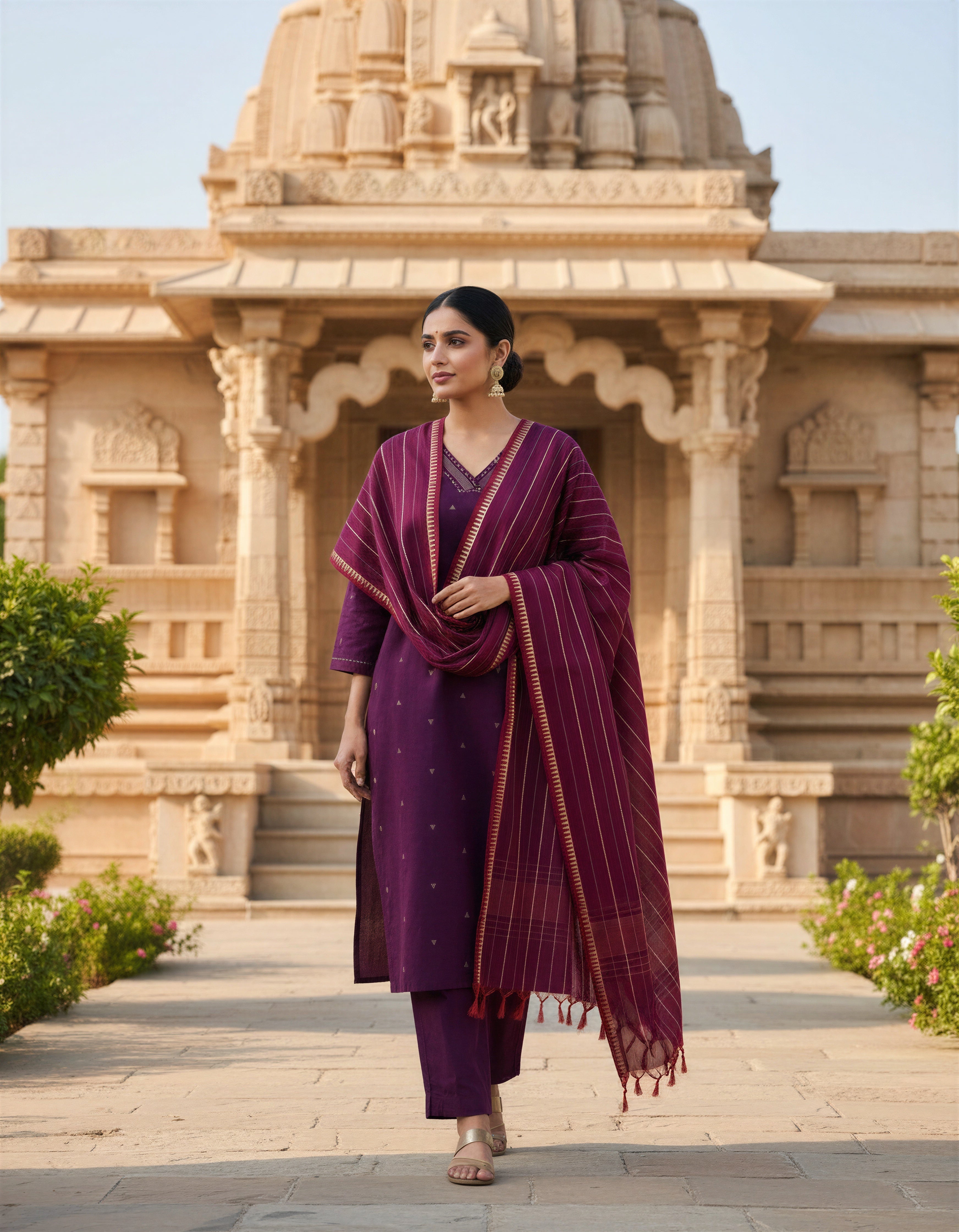
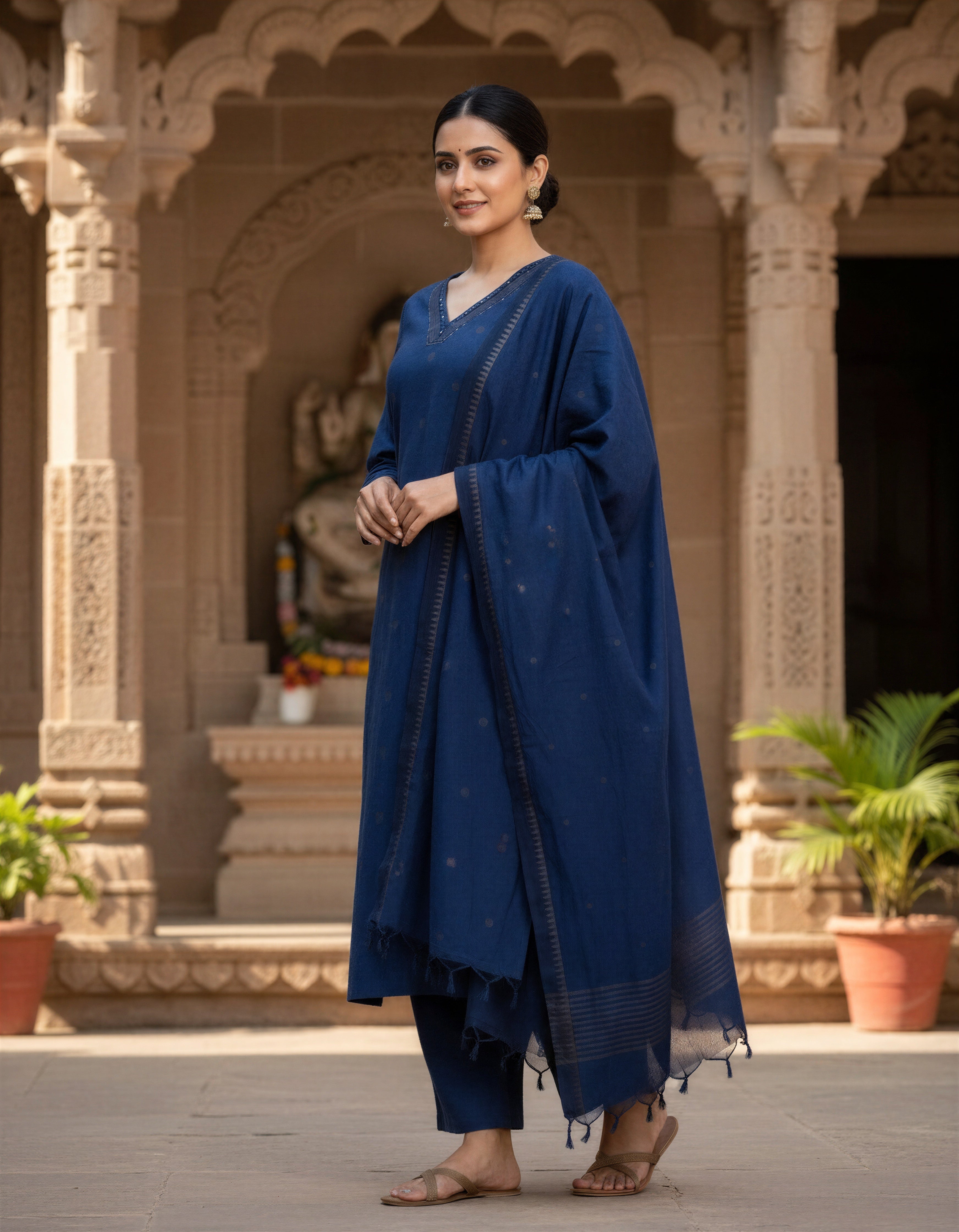
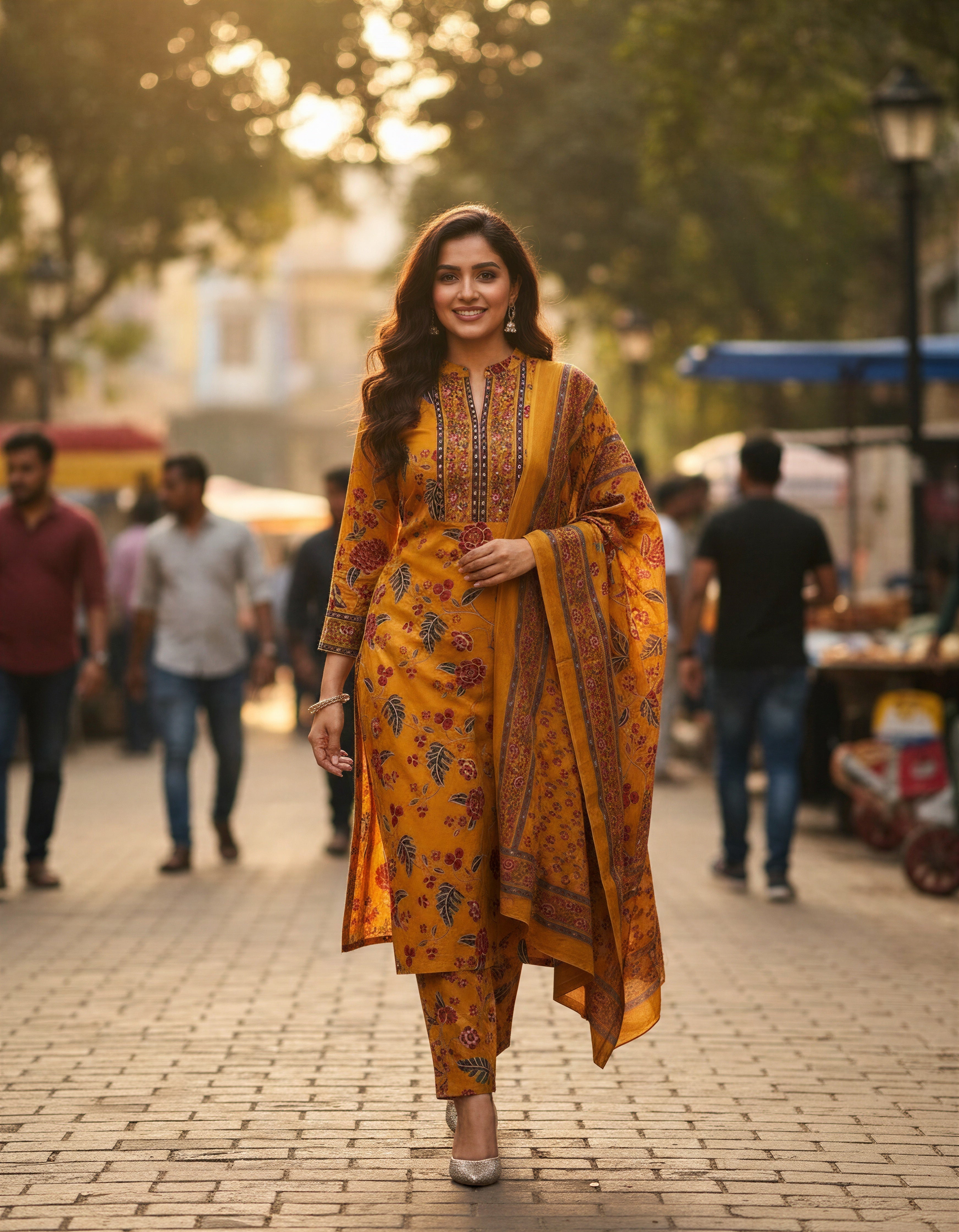
Shop Handblock Print Kurta Sets at Ivory Hues Singapore
Our handblock and Jaipuri print collections are curated for women who want authentic Indian textiles without the noise of over-embellished fashion. Every piece is made from pure cotton — breathable, comfortable in Singapore's climate, and genuinely individual.

How to Spot Genuine Handblock Printing vs. Machine Print
| Feature | Handblock Printed | Machine / Screen Printed |
|---|---|---|
| Repeat precision | Slight natural variation — no two repeats are identical | Perfectly mechanical repeat, pixel-exact |
| Edges of motif | Soft, slightly feathered — dye spreads into fibre | Crisp, sharp lines |
| Back of fabric | Faint mirror image of print visible on reverse | Reverse is usually plain / white |
| Block overlap marks | Occasional faint double-stamp at block joins | None |
| Price | Higher — each print is handmade | Lower — fully automated |
The imperfection is the certificate. A handblock print that looks identical to a machine print in every repeat is probably not handblock-printed. Trust the slight wobble.
How to Style a Handblock Print Kurta Set
Handblock prints are statement pieces in themselves — the styling rule is usually "let the print lead." Here is how to wear them for different occasions in Singapore.
For Everyday Wear & Office
- Pair a black or navy Jaipuri print kurta with straight-cut cotton pants in a solid coordinating colour.
- Keep jewellery minimal — a single oxidised silver necklace or small studs. The print is the jewellery.
- Flat Kolhapuri chappals or block heels complete the look.
For Casual Weekends
- A handblock kurta over white wide-leg linen trousers is a relaxed, polished weekend outfit.
- Throw the dupatta loosely over one shoulder — or skip it entirely for a more casual feel.
- Woven jute tote, tan sandals, and you're done.
For Indian Occasions & Festive Days
- Wear the full 3-piece set: kurta, churidar/salwar, dupatta.
- Elevate with a statement jhumka (chandelier earring) and a bangle stack in gold or lac.
- High heels or embroidered juttis for footwear.
Colour Pairing Guide
| Print Base Colour | Best Bottom Colour | Dupatta Style |
|---|---|---|
| Black (Sunehri Kaala) | Black or ivory churidar | Printed dupatta or plain gold |
| Mustard (Anokhi Raag) | Ivory or deep green | Plain or complementary block print |
| Wine (Anokhi Dhaaga) | Ivory, nude, or deep maroon | Solid wine or contrast dupatta |
| Lapis blue (Anokhi Bunavat) | Ivory, steel grey, or sky blue | Embroidered or printed dupatta |
Caring for Your Handblock Print Kurta
Cotton handblock prints are durable and improve with age — the dyes soften beautifully over washes. A few habits preserve the print's richness.
-
Wash in cold water, separately
Cold water (below 30°C) prevents dye bleeding. First wash separately to catch any initial run-off — this is normal for natural and reactive dyes. -
Use a gentle detergent
Avoid harsh biological detergents or whitening agents. A mild soap or detergent designed for colours preserves the depth of the print. -
Do not wring — press and roll
Wringing cotton suits can stretch the fabric and distort the print. Press excess water out gently and roll in a towel before drying. -
Dry in shade, not direct sunlight
Singapore's sun is strong. Dry in shade or indoors to prevent rapid fading of the print's deepest tones. -
Iron on medium heat, on reverse
Ironing on the reverse (printed side down, against a clean cloth) prevents the iron from dulling or flattening the print surface.
Frequently Asked Questions
© Ivory Hues Singapore · www.ivoryhues.sg · Free island-wide delivery · Indian ethnic wear for women