

Gajji Silk Kurti Singapore – Silk Kurti with Jeans & Styling Guide | Ivory Hues
Fabric & Styling
Gajji Silk Kurti Singapore — The Art of Wearing Silk Casually
Gajji silk is Gujarat's finest everyday silk — lustrous, structured, and surprisingly versatile. Learn what it is, why it works in Singapore's heat, and how to style it with jeans, palazzos, and beyond.
Shop Silk KurtisWhat Is Gajji Silk?
Gajji silk (also spelled "Gaji silk") is a traditional Gujarati silk fabric with a history stretching back to the royal courts of the Saurashtra region of Gujarat. The name derives from the Persian word gaz (a unit of measure), reflecting the fabric's trade origins along historic textile and spice routes.
Gajji silk is woven on powerlooms and handlooms from pure mulberry silk threads. Its distinguishing characteristic is a slightly stiff, structured drape — unlike the fluid, flowing quality of georgette or chiffon, gajji silk holds its shape. It has a subtle, matte-sheen finish that is elegant without being flashy, and it accepts jewel-tone dyeing exceptionally well, which is why you typically see it in deep maroons, navy, forest green, mustard, and black.
How Gajji Silk Differs from Other Silks
| Silk Type | Drape | Sheen | Best Used For |
|---|---|---|---|
| Gajji silk | Structured, holds form | Matte to subtle sheen | Kurtis, structured suits, everyday-to-festive |
| Kanjivaram (Kanchipuram) | Heavy, stiff | High, golden lustre | Wedding sarees, special occasions only |
| Georgette silk | Fluid, floaty | Crinkle-matte | Dupattas, anarkalis, draping garments |
| Mul Chanderi | Sheer, very light | Soft semi-sheen | Festive suit sets, dupattas |
| Raw silk (tussar) | Textured, slightly stiff | Natural matte-gold | Kurtas, festive tops, fusion wear |
The gajji silk advantage: Because it holds its shape, a gajji silk kurti does not droop or cling in the heat the way lighter silks do. It stays structured from morning to evening — making it genuinely practical for Singapore's tropical climate, not just a party fabric.
Gajji Silk Kurti at Ivory Hues Singapore
Our Gulmarg collection features gajji silk kurtis designed for the woman who wants the luxury of silk in an everyday silhouette — a sleeveless, structured kurti that works equally well at a Deepavali gathering or a weekend lunch.
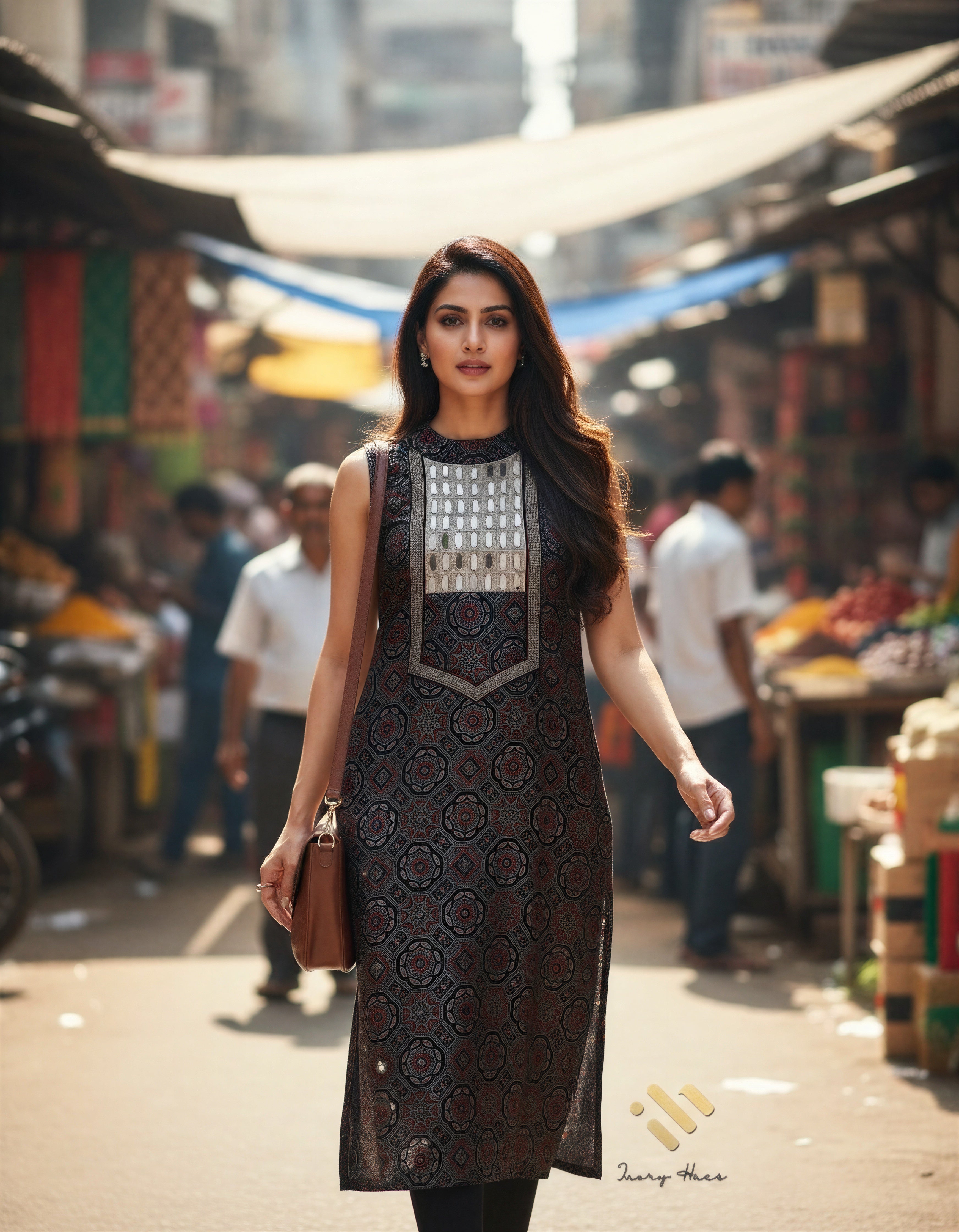
Gulmarg Bana is a standalone kurti — no dupatta or separate bottom included, which makes it the most versatile piece in the collection. Wear it exactly as you would a structured Indo-western top: over jeans, with palazzos, or with a simple salwar. At S$49.90, it is our most accessible silk piece.
Browse our full collection for more silk and festive options across all price points.
How to Style a Gajji Silk Kurti — 5 Complete Outfit Ideas
The gajji silk kurti is the most versatile Indian top you can own. Its structured, polished finish means it dresses up easily — but its casual silhouette (especially a sleeveless cut like Gulmarg Bana) means it wears down just as naturally.
Silk Kurti with Jeans
- Gulmarg Bana kurti
- Dark slim-fit jeans or indigo denim
- Block heel mules
- Small gold hoops
- Mini clutch in tan or gold
Silk Kurti with Palazzo
- Gulmarg Bana kurti
- Wide-leg ivory or gold palazzo
- Strappy flat sandals
- Jhumka earrings
- No dupatta needed
Deepavali / Festive
- Gulmarg Bana kurti
- Silk churidar or slim salwar
- Statement necklace + jhumkas
- Embroidered juttis
- Light stole or dupatta
Office Smart-Casual
- Gulmarg Bana kurti
- Tailored straight-cut trousers
- Low block heels or pointed flats
- Small gold stud earrings
- Structured handbag
Dinner Out / Evening
- Gulmarg Bana kurti
- Black cigarette trousers
- Metallic strappy heels
- Chandelier earrings
- Small metallic clutch
The golden rule of styling silk kurtis: Silk elevates everything it touches. When you wear a silk kurti with jeans, the jeans look intentional. When you wear it with a palazzo, the palazzo looks dressy. Trust the fabric to do the heavy lifting — your accessories just need to complement, not compete.
Is Gajji Silk Suitable for Singapore's Climate?
Singapore's year-round heat and humidity make most people instinctively avoid silk — and that instinct is correct for heavy silks like Kanjivaram or raw silk, which can feel stifling. But gajji silk is a medium-weight silk that behaves differently.
- It breathes reasonably well. Silk is a natural fibre with protein structure that regulates temperature better than polyester or most synthetics. It does not trap heat against the body the way man-made fabrics do.
- Its structure means it does not cling. Unlike silk georgette or chiffon, gajji silk's slight stiffness means it stays off the body, creating a small air gap. This is a meaningful comfort advantage in tropical heat.
- A sleeveless kurti maximises breathability. The Gulmarg Bana's sleeveless cut is specifically practical for Singapore — no extra fabric at the arms, maximum airflow.
The practical verdict: wear gajji silk at indoor events, evening outings, and air-conditioned settings. For full outdoor events in the midday sun, a lightweight cotton suit would be more comfortable. For the typical Singapore mix of indoor-outdoor with good air conditioning — office, restaurant, temple, mall, cultural centre — gajji silk is absolutely wearable.
Caring for Your Gajji Silk Kurti
-
Hand wash or gentle machine cycle only
Never machine wash on a regular cycle. Use cold water and the delicates/silk setting, or hand wash with a small amount of mild shampoo or silk-specific detergent. -
Do not soak
Silk weakens when saturated for long periods. Wash quickly and rinse immediately. Prolonged soaking distorts the weave and can affect the colour. -
Press gently, do not wring
Roll in a clean dry towel to absorb water. Never wring or twist silk — it distorts the weave permanently. -
Dry flat in shade
Hang-drying silk on a clothesline can cause it to stretch unevenly. Dry flat on a towel or use a padded hanger. Keep out of direct sunlight. -
Iron on low, on reverse, with a cloth
Use the lowest silk setting and always iron on the reverse side through a thin cotton pressing cloth. Never iron silk while damp — wait until fully dry. -
Dry cleaning for best results
If in doubt, dry clean. Gajji silk responds well to professional dry cleaning and maintains its structure and sheen better over time with this method.
Frequently Asked Questions
© Ivory Hues Singapore · www.ivoryhues.sg · Free island-wide delivery · Indian ethnic wear for women