






What to Wear for Deepavali 2026 in Singapore
Deepavali 2026 falls on Sunday, 8 November, with Singapore observing the public holiday the next day, Monday, 9 November. If you take one styling rule from this guide, make it this: for the festival itself, reach for a rich jewel tone in a fabric with some shine or texture — silk, gajji silk, Chanderi, or an embellished suit set — rather than plain, everyday cotton. From there, what you wear can flex by moment: modest and traditional for a temple visit, comfortable but festive for a family gathering, and a little more glamorous for an evening party or a walk through Little India's light-up.
The Quick Answer: What to Wear for Deepavali 2026
- Main celebration (temple + family): a jewel-toned silk, gajji silk, or Chanderi suit set, with a fuller sleeve and dupatta on hand for temple visits.
- Evening party or light-up walk: the same jewel-tone palette, dialled up — more embellishment, statement jewellery, or a fuller silhouette.
- What to avoid: plain cotton with no festive detail, which tends to under-dress the day. Save it for the days around Deepavali, not the festival itself.
- Comfort note: Singapore stays warm and humid even in November, so a breathable festive fabric (Chanderi or gajji silk) beats heavy brocade or velvet.
When Is Deepavali 2026 in Singapore?
Deepavali, also called Diwali, is the Hindu festival of lights, marking the symbolic victory of light over darkness and good over evil. In 2026, it falls on Sunday, 8 November. Because that date lands on a weekend, the observed public holiday moves to Monday, 9 November 2026. Most families keep prayers and celebrations on the actual festival day and use the Monday as an extra day for visiting or resting.
Little India traditionally holds its annual Deepavali light-up along Serangoon Road in the weeks around the festival, with a festive bazaar. Exact 2026 dates are usually confirmed closer to the season, so check official event listings nearer November.
Why Colour Matters at Deepavali
Deepavali is, literally, the festival of lights, and clothing has long followed that theme. Gold is considered especially auspicious — in jewellery, dupatta borders, and zari embroidery — as a nod to prosperity for the year ahead. Rich jewel tones are a longstanding favourite for day and evening functions alike: emerald green, sapphire or royal blue, ruby red, deep maroon, and amethyst purple all read as festive, especially in fabrics with some shine or drape. Yellow and red carry their own associations too — yellow for happiness, red for the triumph of good over evil. For a near-universal safe choice, pair a jewel tone with a gold accent.
What to Wear, Occasion by Occasion
Deepavali usually isn't one event — it's a run of moments across a day or two, each with its own dress code.
Temple or Prayer Visit
Dress a shade more modest than for a party: a fuller sleeve, a higher neckline, and a dupatta you can drape over your head. A silk or Chanderi suit set in a jewel tone, kept simple on embellishment, works well — you'll likely be seated on the floor, so ease of movement matters as much as looking festive.
Family Gathering or Home Celebration
This is where you can be festive but relaxed. A co-ord set, a kurta with palazzos, or a Chanderi suit in a bright or jewel shade all work, since you'll be moving between rooms, hosting, and eating a lot. Skip anything too structured if you're also cooking or serving.
Party or Deepavali Light-Up Evening
For an evening party or a walk through Little India's light-up, go a little more glamorous — richer fabric, more embellishment, statement jewellery, or a fuller silhouette like an anarkali or sharara set. A lighter fabric such as gajji silk or Chanderi holds up better over a warm evening than heavy velvet or brocade.
Shop by Fabric: The Ivory Hues Edit for Deepavali
Ivory Hues doesn't yet have a dedicated Deepavali edit, but three existing collections map naturally onto festive dressing, depending on the fabric and level of dress-up you want.
- Gulmarg — built around gajji silk, a treasured fabric from Kutch, Gujarat, known for its soft lustre and rich drape. It holds its shape well in Singapore's humidity, making it a strong pick for an evening party or light-up walk.

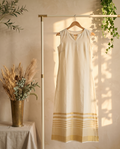
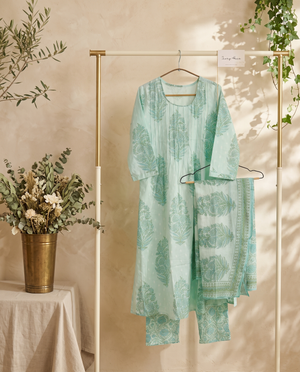
- Malhar — pairs Jaipur's handblock-printed cotton (Sanganeri and Bagru traditions) with the label's own Jamdani handloom heritage piece. Good for something breathable and artisanal for a family gathering, with a Jamdani option for a more traditional finish.

- Noor — built on mul Chanderi, one of the sheerest, most refined weaves in Indian ethnic fashion, styled for understated luxury. Fitting for temple visits and home celebrations alike, where you want festive polish without heavy embellishment.

Across all three, the logic is the same: pick a jewel tone or gold-accented piece in a fabric with texture or drape, and let the occasion decide how much embellishment you add.
Dressing for a Singapore Deepavali: Practical Notes
Singapore stays warm and humid year-round, so heavier silks and multiple layers that suit a cooler Indian winter can feel like too much here, especially for an evening out — breathable festive fabrics like Chanderi, mul, and gajji silk look rich without the discomfort. The day often involves more than one stop — temple, a family meal, and perhaps a light-up walk or party — so comfortable footwear matters more than usual, and a light shawl is worth carrying for air-conditioned malls or restaurants. Deepavali in Singapore is also genuinely multicultural, with colleagues and neighbours outside the Indian community often joining in, so it's worth choosing a piece you'll be happy to wear again.
Frequently Asked Questions
What is the exact date of Deepavali in 2026 in Singapore?
Deepavali 2026 falls on Sunday, 8 November 2026. As this lands on a weekend, the public holiday is observed the next day, Monday, 9 November. Most families hold prayers and celebrations on the actual festival day, and treat the Monday as an extra day off.
What colour should I avoid wearing for Deepavali?
This varies by family and region, so treat it as guidance, not a fixed rule. Black is most commonly avoided in some traditions, linked to darkness and mourning — a contrast to a festival about light overcoming darkness. White is more contested: some see it as pure and auspicious, others feel it's too understated for the main day. When unsure, jewel tones, gold, red, and yellow are close to universally considered safe.
Can I wear a co-ord set for Deepavali?
Yes, particularly for a family gathering or evening party, given Singapore's climate. A co-ord in a jewel tone or a richer fabric like Chanderi or gajji silk reads as festive rather than casual. For a temple visit, add a dupatta or dressier top for a more modest dress code.
What's appropriate for a Deepavali office party in Singapore?
A smart-festive middle ground works best: a Chanderi or silk kurta set in a jewel tone, without the heaviest embellishment you'd save for a wedding-style event. A shorter after-work timeframe favours a piece that moves well, and footwear you can wear from desk to dinner helps.
Do I need silk, or is cotton acceptable for Deepavali?
Cotton is fine for the days around Deepavali or daytime errands, but for the main celebration most opt for more richness or drape — silk, gajji silk, or Chanderi. For cotton-like breathability without looking too casual, a mul Chanderi suit is a good middle ground for Singapore's climate.
What should I wear differently for a temple visit versus a party?
For a temple visit, lean modest: fuller sleeves, a higher neckline, and a dupatta to drape over your head, in a fabric comfortable to sit on the floor in. For a party or the light-up, go more glamorous — more embellishment, statement jewellery, a fuller silhouette like an anarkali or sharara — while staying within a similar jewel-tone palette.